Did you know that nearly 1 in 8 men will face prostate cancer? This fact comes from the American Cancer Society. Finding the symptoms early can make a big difference in treatment success. Prostate cancer is very common in the US, so knowing what to look for is key.
When people know these symptoms, they and their families can get help faster. Getting checked regularly can save lives. For more details on early detection and treatment, click on Mayo Clinic’s resources. Talking about prostate cancer helps everyone understand it better. This leads to better support for those who are diagnosed.
Key Takeaways
- Prostate cancer affects nearly 1 in 8 men during their lifetime.
- Early detection is key to improving treatment outcomes.
- Awareness of symptoms can lead to timely medical consultations.
- Common prostate cancer symptoms include urinary issues and bone pain.
- Regular screenings are critical for men over a certain age.
- Support resources are available for patients and families.
Understanding Prostate Cancer
Prostate cancer begins when cells in the prostate gland grow out of control. This gland is essential for making seminal fluid. It’s located below the bladder and in front of the rectum. The disease can start as a small problem but might spread to other areas.
Age, genetics, and the environment play roles in prostate cancer risk. It’s more common in men older than 50. Knowing these risk factors is key to understanding and protecting prostate health. Catching the disease early greatly improves treatment success.
| Factor | Impact on Risk |
|---|---|
| Age | Increased risk for men over 50 |
| Genetics | Family history raises likelihood |
| Race | Higher incidence in African American men |
| Environment | Exposure to certain chemicals may heighten risk |
Learning about prostate cancer helps people take care of their health. Knowledge leads to early detection and treatment. Let’s work towards increased awareness and better health options.
Recognizing the Symptoms of Prostate Cancer
Knowing the early signs of prostate cancer is key. The symptoms might not be clear at first. They can seem like minor issues. But spotting them early can mean better treatment results.
Common Early Signs
Here are some common signs:
- Frequent urination, especially during the night
- Difficulty starting or stopping urination
- Painful urination
- Blood in urine or semen
These could be confused with other, less serious health problems. It’s vital to know these signs for the right health decisions. For detailed info on symptoms, check reliable sources like this.
Importance of Awareness
Being aware of the early signs of prostate cancer makes a big difference. It can lead to catching the disease early. This often means better options for treatment. Groups like the Prostate Cancer Foundation stress the power of knowledge. Talking to doctors about any strange symptoms can improve chances greatly.
Prostate Cancer Symptoms: What to Look For
Knowing specific signs of prostate cancer can lead to faster treatment. Look out for urinary problems, changes in bathroom habits, and trouble with erections. Spotting these early helps keep men healthy.
Urinary Issues
Urinary problems are common early signs of prostate cancer. Men may notice:
- Reduced urine flow
- Frequent night-time bathroom trips
- Incontinence or hard starts and stops
These could mean the prostate is impacting urination. It’s key to see a doctor if you notice these changes.
Bowel Changes
Prostate cancer can press on the bowel, altering bowel habits. Symptoms can be:
- Constipation
- Diarrhea
These shifts can come from inflammation or growths. Watching for them is important.
Erectile Dysfunction
Erectile dysfunction is a major warning sign. Some men think it’s just aging. But it can be a clue to prostate issues. Early action improves handling of both erection problems and possible prostate cancer.
Screening Tests for Early Detection
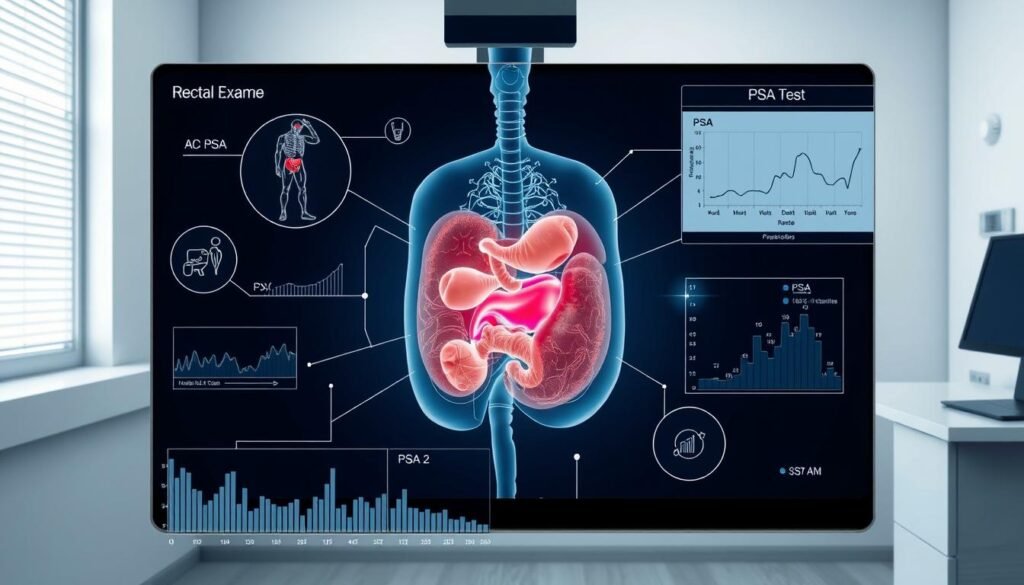
Finding prostate cancer early is crucial for successful treatment. There are several screening tests available. These tests, including PSA levels and the digital rectal exam, are key tools.
PSA Levels Explained
PSA stands for Prostate-Specific Antigen, a protein made by the prostate gland. Testing PSA levels in the blood is a vital way to screen for prostate issues. High PSA levels may point to prostate cancer or other conditions.
It’s important for men to talk with their doctors about PSA results. This is especially true if their PSA levels are above the normal range.
Digital Rectal Exam (DRE)
The digital rectal exam is another crucial test. In this test, a doctor feels the prostate for any abnormalities by inserting a finger into the rectum. It gives a direct look at the prostate’s health.
Using the DRE with PSA tests can improve the chances of finding any issues early on.
Other Signs of Advanced Prostate Cancer
As prostate cancer gets worse, some signs become clearer. Knowing these signs is key for quick help and care.
Bone Pain and Its Implications
Bone pain signals that the cancer might have spread. This pain affects how a person lives. It can hurt in the back, hips, or pelvis, making painkillers more needed.
Spotting this pain early is crucial. It helps keep movement easier and manage pain better.
Weight Loss and Fatigue
Advanced prostate cancer often leads to losing weight without trying. The body uses more energy to fight the cancer and handle treatment, causing tiredness. This can make someone feel much weaker.
Watching for weight loss and fatigue is important. It helps adjust treatments and offer the right support.
| Symptom | Implication | Action |
|---|---|---|
| Bone Pain | Indicates potential spread of cancer | Consult a healthcare provider for pain management |
| Weight Loss | May signify the body’s struggle against cancer | Schedule a nutritional assessment |
| Fatigue | Reflects the body’s energy depletion | Discuss fatigue management strategies |
Understanding these symptoms helps patients and families deal with advanced prostate cancer. Stay informed on the signs and take steps for better health management.
Risk Factors Associated with Prostate Cancer
Understanding prostate cancer risk factors is key for men and their health. Certain elements have a big impact on the chance of getting this disease. Knowing these allows men to take steps to watch their health better.
Age and Genetic Predisposition
Age is a huge factor in prostate cancer risk. The risk goes up after men hit 50. Also, having family members who had prostate cancer increases a man’s risk. Knowing your family health history helps in understanding your own risk.
Lifestyle Choices and Environment
The way you live affects your risk for prostate cancer. Eating well and staying active can lower your risk. But, a high-fat diet and not moving much might raise it. Being around certain chemicals in places like farms or factories can also increase risk. For more insights on lifestyle and risk, check out this resource.

The Role of Regular Check-Ups
Regular check-ups are key for keeping the prostate healthy. By having routine exams, doctors can watch for changes. They help men understand prostate health better. People can talk about their risks, family background, and any symptoms that worry them. This can catch prostate cancer early.
Check-ups are very important. Catching problems early can make treatment more successful. During these visits, tests like the PSA can give useful information. By keeping an eye on the health of the prostate, doctors can quickly deal with any issues. This is called preventative care.
Getting check-ups regularly shows you’re taking charge of your health. It reminds everyone to keep an eye on their prostate health. Men who get advice from their doctors regularly make better health choices. This helps improve their health overall.
When to Seek Medical Advice
Knowing when to seek medical advice about prostate cancer is key to staying healthy. If you have urinary problems, trouble with erections, or bowel habit changes, see a doctor. These signs mean it’s crucial to get checked early.
Don’t wait if you have symptoms that keep happening. If prostate cancer runs in your family or you’re getting older, you might need checks often. Experts can offer the advice you need.
Spotting early signs of prostate cancer is important. Even if you feel fine, get regular doctor visits. Knowing what symptoms to watch for helps you talk to your doctor about tests. For more details, visit prostate cancer symptoms.

Resources for Prostate Cancer Awareness
Finding the right prostate cancer resources can greatly help patients and their families. Emotional support and trustworthy information are key in this journey. These resources offer help and knowledge to empower affected individuals.
Support Groups and Hotlines
Support groups create a welcoming space for those with prostate cancer. They connect people who understand the diagnosis’s challenges. Here, individuals can share stories, offer advice, and make new friends.
Hotlines provide instant support, often from trained experts. Organizations like the American Cancer Society offer these vital services. They help people feel supported during tough times.
Educational Websites and Materials
Educational content is crucial for understanding and awareness of prostate cancer. Dedicated websites offer information on symptoms, treatments, and new research. The American Cancer Society and the Prostate Cancer Foundation are trusted sources for comprehensive insights. Using these resources helps patients make informed health decisions.
Conclusion
Talking about prostate cancer is essential. Getting to know its symptoms early can really help with treatment. It’s important for everyone to understand how crucial early detection is.
This knowledge lets people make smart choices if they face risks. It shows how learning about prostate health can give power to people.
Keeping the conversation about prostate cancer going helps everyone. It lets us all know more about how to find and treat it. Knowing about check-ups and signs of prostate cancer can make a big difference in life.
Being informed helps us deal with prostate cancer better. Sharing information helps improve how we deal with it. This leads to better health for patients and their families.
By working together, we can make our approach to prostate cancer better. Highlighting the value of catching it early is key in the fight against it.