Every year, around 248,530 men in the United States face a prostate cancer diagnosis. This number sheds light on the urgent need for high-quality care. It stresses the importance of expert guidance through the many treatment paths available. Selecting the right hospital is crucial for positive treatment results. This choice shapes how well patients will recover, emphasizing the need for top-notch care and skilled specialists.
Patients looking for effective prostate cancer treatments tend to choose hospitals known for excellence. In Tampa Bay, several hospitals stand out because of their commitment to patient care. These hospitals feature a team approach to healthcare. This article will look at the best Tampa Bay hospitals, their services, patient success stories, and the credentials of leading prostate cancer doctors.
Key Takeaways
- Prostate cancer affects a significant number of men annually in the U.S., stressing the need for quality care.
- Choosing the right hospital can greatly impact treatment outcomes for prostate cancer patients.
- Top hospitals in Tampa Bay are equipped with expertise in advanced treatment options.
- Multidisciplinary teams enhance patient care and ensure comprehensive treatment plans.
- Prostate cancer specialists in Tampa Bay have received high ratings for their expertise and care.
Introduction to Prostate Cancer Care
Prostate cancer is a major health issue, with 1 in 8 men in the U.S. diagnosed in their lifetime. It’s crucial to recognize symptoms like urination difficulties or pelvic pain early. Prostate cancer diagnosis and staging are key in effective management.
The Gleason score helps doctors grade prostate cancer severity, ranging from 6 to 10. Higher scores mean more aggressive cancer. It sorts cancer into low (6), medium (7), and high (8-10) grades. Despite the fear a diagnosis brings, most men with the disease survive, thanks to treatment advances.
Correct staging is critical in deciding on treatment. Prostate cancer has four stages, from I (localized) to IV (metastatic). Staging tests, like high PSA levels or Gleason scores, guide treatment choices. This ensures patients get tailored care for their situation.
The survival rate for prostate cancer has jumped from 70% to over 90% in twenty years. This boost is thanks to skilled medical teams and advanced treatments. Expertise in urology and oncology is vital for the best outcomes.
Continuous monitoring is essential due to prostate cancer’s unique nature in each man. Regular check-ups refine treatment, backed by new research. For more on treatments, visit cancer.org’s guidance.
The Importance of Choosing the Right Hospital for Prostate Cancer
Choosing the right hospital for treating prostate cancer is crucial. It greatly affects the results for patients. Every year, 1 in 6 men in the US are told they have prostate cancer. The choice of hospital has a big impact on getting the latest treatments and technologies.
Leading hospitals have prostate cancer specialists who focus on teamwork and all-around care. Patients get access to many treatments, from surgery to radiation. Knowing the treatment options is key. For example, Black men often get radiation, while White men might choose surgery. This shows why making an informed choice is essential.
Most men with prostate cancer pick surgery or radiation over waiting to see what happens. Less than 10% choose to wait. This shows how important it is to get the right treatment fast. Patients feel they make the best choice when they know all the options. This includes understanding medical facts and personal concerns.

The National Cancer Institute teams up with about 70 cancer centers across the US. They make sure these centers offer the best care. These places have teams that work together to help patients do well. So, when looking for care, choose centers known for being the best.
Finding the Best Prostate Cancer Care
Looking for the best prostate cancer care means doing your homework. First, look at local hospitals and clinics that are known for their work with prostate cancer. It’s important to talk to specialists who understand your situation.
Some hospitals run prostate cancer clinical trials. These trials give patients access to new therapies. This can offer better results than standard treatments.
When picking a treatment plan, men should look at their Gleason score and cancer stage. Gleason scores range from 2 to 10, with 6 to 10 being more serious. MRI and CT scans help determine the cancer’s stage, from I to IV.
Possible treatment paths include watchful waiting, surgery, and radiation. Active surveillance works best for cancer that is not growing fast. Surgery might be the right choice for cancer that hasn’t spread outside the prostate. Understanding these choices helps patients make good health decisions.
In conclusion, finding the right prostate cancer care means researching, talking to experts, and weighing all options. This includes thinking about clinical trials. Being well-informed lets people make the best decisions for their health.
Top Hospitals for Prostate Cancer Treatment in Tampa Bay
Tampa Bay is known for its exceptional hospitals that focus on prostate cancer. Tampa General Hospital and Moffitt Cancer Center are two standout facilities. They offer effective treatments and value patient happiness and new methods.
Moffitt Cancer Center is a top choice in Florida. It is famous for its top-notch care and research that leads to better survival rates. It has a patient satisfaction score of 4.9 out of 5, showing its commitment to support during treatment. The center has over 9,000 staff members and more than 350 clinical trials. This shows its dedication to improving patient outcomes.
Tampa General Hospital is also a leader in treating prostate cancer. It uses the latest technology and a team approach for customized care plans. Patients get unique treatments suited just for them.
Both hospitals aim for the highest quality in prostate cancer care. If you need advanced treatment in Tampa Bay, these hospitals are excellent choices. They are well-known for their expertise and care for patients.

Tampa General Hospital: A Leader in Advanced Prostate Cancer Care
Tampa General Hospital (TGH) is well-known for its excellent prostate cancer care. They offer world-class services to their patients. The hospital teams up experts from many areas to provide the best care. They make sure every patient gets treatment plans that meet their specific needs. They also use the latest prostate cancer treatment options.
Multidisciplinary Team Approach
At TGH, urologists, oncologists, and radiation experts work closely together. This teamwork leads to better treatment plans for patients. Thanks to this approach, patients see improved outcomes. The hospital’s success shows in its high survival rates for patients.
Recognition and Patient Outcomes
U.S. News & World Report ranks TGH among the best hospitals for cancer care. This shows TGH’s dedication to top-notch prostate cancer care. The hospital is celebrated for its superb patient results. It’s also ranked in the top 50 hospitals for cancer treatment nationwide. TGH’s wide range of diagnostics and treatments makes it a global leader in healthcare.
Moffitt Cancer Center: Florida’s Top Cancer Hospital
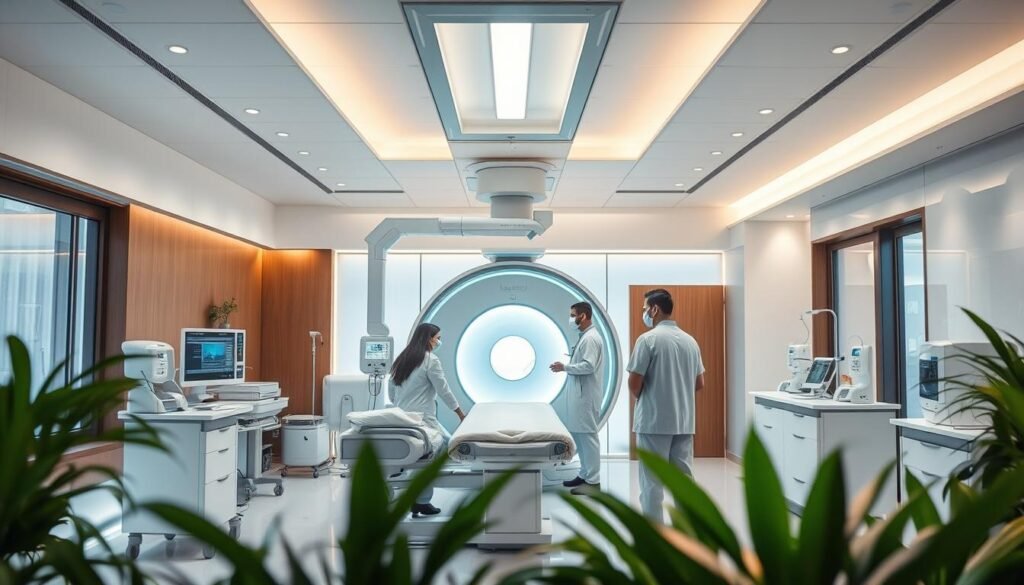
Moffitt Cancer Center is a leading name in cancer care, especially for prostate cancer treatment. It is recognized as an NCI-designated Comprehensive Cancer Center, a rare honor in the U.S. This status gives Moffitt patients access to the latest prostate cancer clinical trials and treatments. The center is committed to researching new ways to fight prostate cancer. This helps improve patient outcomes greatly.
National Comprehensive Cancer Center Designation
Moffitt’s status as a National Comprehensive Cancer Center means it meets high standards in research and care. This achievement highlights Moffitt’s commitment to advanced prostate cancer treatment. Thanks to ongoing research, patients enjoy survival rates much higher than the national average.
Innovative Treatment Options and Clinical Trials
The Moffitt treatment team is a group of specialists focused on prostate cancer. They work together to create personalized treatment plans. These plans may include surgery, radiation, and chemotherapy, along with access to leading-edge clinical trials. By participating in trials, patients can try new therapies early. This confirms Moffitt’s role as a top oncology leader.
| Rankings & Awards | Highlights |
|---|---|
| 1st in Florida & Southeast | Ranked #1 cancer hospital by Newsweek (2024) |
| NCI Designation | Recognized Comprehensive Cancer Center |
| Survival Rates | Up to 4 times the national averages |
| Expertise | Specialists focused on prostate cancer |
| Clinical Trials | Robust program offering groundbreaking treatments |
Urology and Oncology Experts in Tampa
Tampa is home to some of the top prostate cancer specialists committed to exceptional care for patients. The Moffitt Cancer Center shines with its Urologic Oncology Program. It focuses on diagnosing and treating prostate cancer at all stages. The center is at the forefront with treatments like robotic surgery and advanced radiation therapies, including IMRT and brachytherapy.
Understanding these treatments helps greatly in prostate cancer rehabilitation.
At Moffitt, a team of experts from various fields works together. This includes urologists, radiation oncologists, and more. Their joint efforts ensure patients receive personalized and comprehensive care.
This approach covers both the physical and emotional recovery aspects. Such collaboration promotes a well-rounded recovery, improving both outcomes and life quality. Moffitt patients can make appointments easily, speeding up access to top-notch care. Notably, experts like Dr. Eduardo Sotomayor and Dr. Julio Pow-Sang are highly rated in their fields.
| Doctor | Specialty | Rating (out of 5) |
|---|---|---|
| Dr. Eduardo Sotomayor | Medical Oncology | 5.0 |
| Dr. Timothy Nywening | Surgical Oncology | 3.7 |
| Dr. Mayer Fishman | Hematology | 4.1 |
| Dr. Julio Pow-Sang | Urologic Oncology | 4.4 |
| Dr. Arvind Soni | Radiation Oncology | 4.6 |
| Dr. Peter Johnstone | Radiation Oncology | 4.9 |
| Dr. Jingsong Zhang | Medical Oncology | 4.3 |
| Dr. Michael Poch | Urologic Oncology | 4.7 |
| Dr. Alice Yu | Urologic Oncology | 4.7 |
| Dr. Robert Lavey | Radiation Oncology | 5.0 |
| Dr. Raviender Bukkapatnam | Urology | 4.4 |
| Dr. Javier Torres-Roca | Radiation Oncology | 5.0 |
Moffitt Cancer Center stays a top pick for men needing support in their prostate cancer journey. For more on the specialists, visit this resource.
Prostate Cancer Treatment Options Available
For those diagnosed with prostate cancer, knowing the treatment options is key. These choices impact recovery, effectiveness, and life quality after treatment. Two main options are minimally invasive surgery and advanced radiation therapy, each with unique benefits.
Minimally Invasive Prostate Cancer Surgery
Minimally invasive surgery, like radical prostatectomy, is a top choice. At MD Anderson, most surgeries use this method. It means smaller cuts, less bleeding, less pain, and shorter hospital stays. Patients often recover faster, getting back to daily activities sooner than with traditional surgery.
Advanced Radiation Therapy Treatments
Advanced radiation therapies, like proton therapy and brachytherapy, focus on the tumor while sparing healthy tissue. Proton therapy targets tumors with precision, good for localized cancer. Brachytherapy places radioactive material close to the tumor for concentrated treatment. In advanced cases, these may be combined with hormone therapy to tackle hormone-sensitive cancer parts.
The mix of minimally invasive surgery with advanced radiation opens many doors for prostate cancer management. Patients should talk to their healthcare teams to find the most suitable treatment plan.
| Treatment Option | Benefits |
|---|---|
| Minimally Invasive Surgery | Smaller incisions, less pain, quicker recovery |
| Proton Therapy | Precise tumor targeting, minimal impact on healthy tissue |
| Brachytherapy | Targeted radiation delivery, shorter treatment times |
Understanding Prostate Cancer Diagnosis and Staging
The first step in tackling prostate cancer effectively is getting a detailed prostate cancer diagnosis and staging. It’s crucial because it impacts the outlook and treatment choices for each patient. The AJCC TNM system, updated in 2018, is commonly used for this purpose. It looks at five key aspects:
- Extent of the primary tumor
- Spread to nearby lymph nodes
- Metastasis to other parts of the body
- Prostate-specific antigen (PSA) level
- Grade Group based on the Gleason score
Understanding the stages of prostate cancer is key. It’s categorized from stage I to IV, some with parts like IIA and IIB. Lower stages show less spread. Higher ones show the disease has advanced more. Each stage description combines T, N, and M categories with the Grade Group and PSA level.
Diagnosing prostate cancer usually starts with screening tests. The PSA blood test is a critical tool here. It typically uses a cutoff of 4 ng/mL. Men with 4 to 10 ng/mL PSA levels have about a 25% cancer risk. If it’s over 10 ng/mL, the risk jumps to more than 50%.
The Gleason score helps to grade the cancer, from 2 to 10 based on how it looks under a microscope. A score of 6 or less signals well-differentiated, less aggressive cancer. Besides these, new tests like the 4Kscore are coming up to better understand cancer’s nature.
New imaging methods, like Diffusion-weighted MR Imaging and PET scans, are under study too. They might play a big role in spotting and staging prostate cancer. Thanks to better diagnostic tools and ways to gauge cancer’s behavior, doctors can offer more tailored and effective treatment plans.
Support Groups and Holistic Care for Prostate Cancer Patients
Prostate cancer is a leading health concern for American men, second only to non-melanoma skin cancer. It’s not just about the physical battle. Many men find holistic prostate cancer care helpful. This method treats the whole person, focusing on emotional support, wellness, and alternative treatments.
Support networks are key to a patient’s healing. Prostate cancer support groups offer shared experiences and emotional support. They help with decision-making and can improve life quality. Studies even suggest support groups might help some men live longer.
- The UCSF Prostate Cancer Support Group meets monthly, welcoming patients, partners, and caregivers.
- A dedicated UCSF support group for gay men connects individuals facing similar challenges twice a month.
- The Peer Support program at the UCSF Patient and Family Cancer Support Center pairs patients with understanding peers.
Emotional wellness matters for partners and caregivers too. They often face more anxiety and depression. Everyone involved needs support for their mental health.
Adding holistic therapies can enhance well-being. Yoga and meditation help manage anxiety and fatigue. Acupuncture might reduce pain and side effects of treatments. Foods rich in lycopene, like cooked tomatoes, are beneficial. Supplements like pomegranate extract also show promise.
Combining holistic methods with traditional treatments builds resilience. It forms a wider support network for patients. Support groups and resources like the American Cancer Society offer 24/7 help and financial aid programs. This ensures patients get the support they need.
Conclusion
Finding the best care for prostate cancer means knowing all your treatment options. This includes options like surgery and radiation. The key is to choose a hospital that uses new treatments and works as a team for the best results. By learning as much as you can, you can choose what’s best for your own situation.
It’s also vital to understand the good and bad points of each treatment. Some treatments can lower the risk of dying from cancer, but they might also affect your sexual health. The choices you make today will greatly affect your life and health in the future. Overdiagnosis and false positives are common in prostate screenings, so it’s important to think carefully about the risks and benefits.
Keeping up with the latest cancer research and joining support groups are important steps. The right mix of doctor’s expertise, treatment, and support can improve your chances for a good outcome. Dealing with prostate cancer is hard, but with the right health care team, you can have hope for a better future.