Did you know that 1 in 8 men will get prostate cancer in their life? This fact highlights the need for effective treatments. External Beam Radiation Therapy (EBRT) is a main choice for this disease. It uses high-energy rays to kill cancer cells, while keeping healthy tissue safe.
EBRT requires a team that includes a radiation oncologist, a physicist, a dosimetrist, and a therapist. They all work together to create a custom plan for each patient. The first step is a simulation that lasts 30 minutes to two hours. After that, treatments are short — 15 to 30 minutes daily for several weeks.
Understanding EBRT and what the treatment involves is key for men dealing with prostate cancer. It shows why EBRT is a top choice among cancer treatments today.
Key Takeaways
- EBRT involves a multi-disciplinary team focused on patient care.
- Initial simulation sessions can last 30 minutes to two hours.
- Treatment time usually ranges from 15 to 30 minutes per session.
- Patients typically undergo EBRT treatments daily for two to eight weeks.
- EBRT is successful in providing long-term disease control and survival rates comparable to surgery.
Understanding Prostate Cancer and Its Treatment Options
Prostate cancer develops in the prostate gland. It can be at different stages and forms, affecting how doctors treat it. Often, this cancer can be managed well, especially if caught early. Survival rates are high. People might undergo surgery, hormone therapy, or radiation. The choice depends on the cancer stage and the patient’s health.
What is Prostate Cancer?
Prostate cancer begins with uncontrolled cell growth in the prostate. It’s linked to genetics, lifestyle, and age. Early detection is crucial, done through tests like digital rectal exams and PSA tests. Catching it early can make a big difference in treatment success.
Overview of Treatment Options
Patient’s conditions guide the choice of treatment for prostate cancer. The options include:
- Surgery to remove the prostate gland
- Hormone therapy to control cancer’s growth
- Radiation therapy, with methods like external beam radiation and brachytherapy
External beam radiation therapy (EBRT) is a common choice. It works for early or advanced stages of prostate cancer. Techniques like Intensity-Modulated Radiation Therapy (IMRT) target the cancer precisely. This protects the surrounding tissues and makes treatment more comfortable for patients.
Importance of Personalized Treatment Approaches
Each patient’s cancer is unique. It’s important to create treatment plans that consider the patient’s health, the cancer type, and personal choices. Custom plans give the best results and improve the treatment experience. Working with healthcare providers, patients can find the best path for their care.
| Treatment Type | Effective For | Benefits |
|---|---|---|
| Surgery | Localized prostate cancer | Early stages have cure rates of about 90% |
| Hormone Therapy | Advanced stages | Effectively slows cancer growth |
| Radiation Therapy | Early and advanced stages | Modern techniques protect nearby tissue |
What is External Beam Radiation Therapy?
External Beam Radiation Therapy (EBRT) is a big step forward in cancer care. It’s an outpatient treatment that aims high-energy beams at the prostate gland. The goal is to kill cancer cells. Knowing what EBRT means helps us understand its role in fighting different cancers.
Definition and Process of EBRT
EBRT has three main steps: simulation, treatment planning, and treatment delivery. In the simulation, doctors decide how to position the radiation beams. Then, in treatment planning, they figure out the best radiation dose for hitting the tumor. Patients usually have EBRT sessions five days a week. These sessions can last from 1 to 9 weeks, lasting about 10 to 30 minutes each.
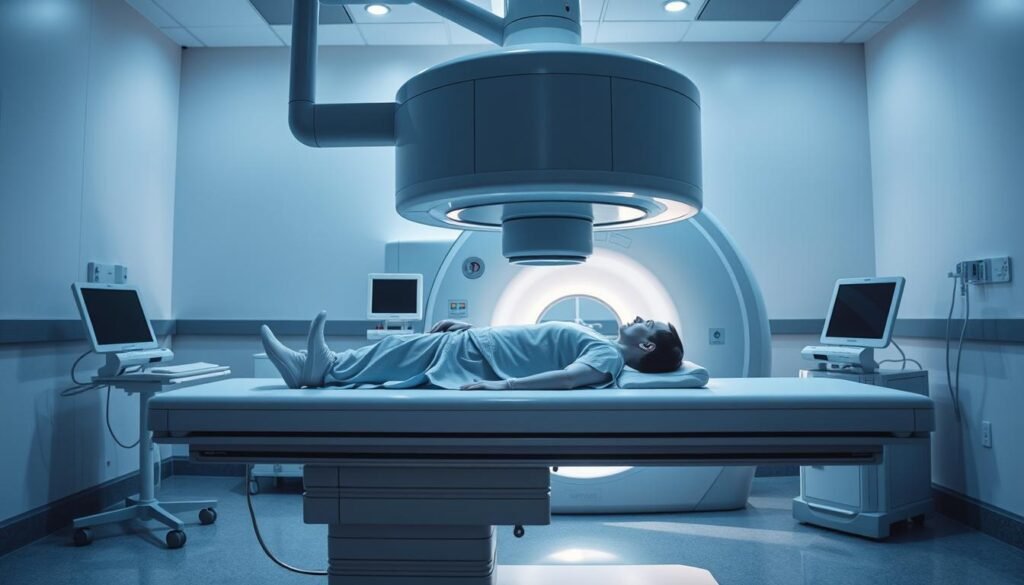
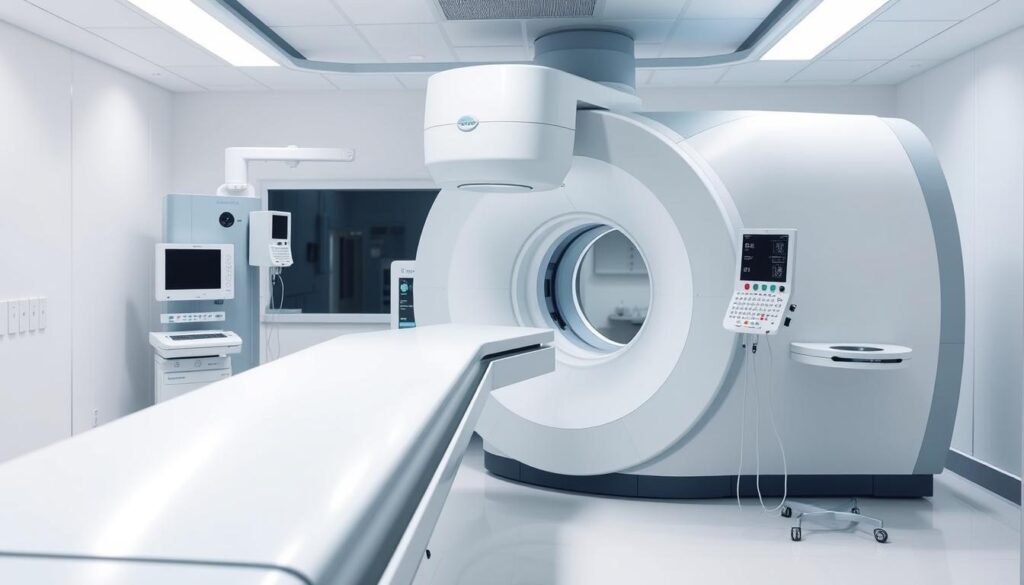
A machine called a linear accelerator (LINAC) sends the radiation right where it’s needed. This precise approach helps target cancer cells without hurting healthy tissue around them.
How EBRT Differs from Other Treatments
EBRT is different from treatments like brachytherapy, where radioactive seeds are put right into or near the tumor. Because it’s not invasive, EBRT works for patients at many cancer stages. It’s a top choice for radiotherapy. It aims to stop cancer cells from growing and keeps healthy cells safe. After treatment, doctors use imaging tests to see how the cancer is reacting. They can change the treatment plan if needed.
How External Beam Radiation Therapy Works
Understanding radiation mechanism in External Beam Radiation Therapy (EBRT) helps patients and their loved ones. This approach targets cancer cells while protecting healthy tissue. It achieves this through high-energy beams. These beams are aimed at the tumor. They work by breaking the cancer’s genetic material, which stops their growth.
The Mechanism of Radiation on Cancer Cells
The core idea of EBRT is to damage DNA in cancer cells. This stops them from growing and spreading. The beams, which may be X-rays or protons, target the tumor carefully. This focus helps to limit damage to surrounding healthy cells.
Types of Radiation Used
Different types of radiation therapy are used in EBRT, each with its benefits. Some important examples include:
- Photon Beams: Traditional X-rays that can reach tumors deep inside.
- Proton Beams: They stop at the tumor, reducing harm to nearby healthy tissue.
- Electron Beams: Best for tumors on or near the surface, like skin cancers.
- 3-D Conformal Radiation Therapy: Uses CT and MRI to aim better, sparing healthy areas.
- Intensity-Modulated Radiation Therapy (IMRT): An advanced 3-D method using small beams for precise targeting.
- Image-Guided Radiation Therapy (IGRT): Adjusts therapy in real-time based on tumor movement.
Intraoperative radiation and stereotactic methods offer even more specialized options. They target specific tumor types, giving a custom approach for each patient. You can learn more about these methods, especially for prostate cancer, here.
Preparing for External Beam Radiation Therapy
Getting ready for external beam radiation therapy (EBRT) is key to effective treatment. The first step involves meeting with a radiation oncologist to talk about personalized care. These talks help make sure the treatment fits the patient’s needs well.
Initial Consultations with Radiation Oncologist
At the start, patients review their health history and the type of cancer they have with their doctor. This conversation helps create a treatment plan that is just right for them. They will also talk about what to expect from treatment, side effects, and changes they might need to make in their daily life.
The Simulation Process
The simulation process involves a planning session that can last from 15 minutes to 2 hours. It includes scans like CT or MRI to get clear pictures of the area to be treated. Sometimes, dye injections or temporary tattoos are used to mark where therapy will be focused.
Planning Scans and Patient Positioning
Staying in the right position is crucial for the success of the therapy. Patients may need custom molds or masks to help them stay still. Before scans, patients might need to fast or make sure their bladder is at the right fullness. Doctors and technicians make final tweaks to the plan with high-tech tools.

Talking effectively with your healthcare team is very important. Keeping in touch with your doctor can make treatment go more smoothly. For more info on what to expect with external beam radiation therapy, check out this guide. Being ready for treatment can make you feel more confident and help you get better results.
What to Expect During External Beam Radiation Therapy
Patients will find External Beam Radiation Therapy (EBRT) to be structured yet supportive. It aims for comfort while providing care with minimal life disruption.
The Treatment Sessions
Patients lay on a table during treatment. A linear accelerator targets the cancer precisely. These sessions usually last 15 to 30 minutes, combining speed with effectiveness.
Typical Duration and Frequency of Treatments
Patients go in for treatment Monday to Friday. This regular schedule helps maximize the therapy’s effects and supports recovery. The appointments over weeks ensure the treatment’s effectiveness is closely watched and adapted if needed.
The Role of the Linear Accelerator
The linear accelerator is key in EBRT. It lets doctors give high radiation doses directly to tumors, saving healthy tissue. This tech makes treatment better, leading to better outcomes and fewer side effects for patients.
Types of External Beam Radiation Therapy Techniques
Different types of external beam radiation therapy exist. Each one aims at tumors accurately while keeping healthy tissues safe. Knowing about these methods helps patients choose the best treatment.
Stereotactic Body Radiation Therapy (SBRT)
Stereotactic Body Radiation Therapy, or SBRT, sends high doses of radiation in a few sessions. It’s faster, which patients like. SBRT uses many beams from various angles, focusing on the tumor yet saving the tissue around it.
Intensity-Modulated Radiation Therapy (IMRT)
Intensity-Modulated Radiation Therapy, or IMRT, finely tunes the radiation’s strength. It hits the tumor but not the healthy organs close by. It uses cutting-edge imaging to shape the beams, making treatment more effective.
Image-Guided Radiation Therapy (IGRT)
Image-Guided Radiation Therapy, IGRT, uses real-time images to ensure accuracy. This is key for tumors in shifting areas, like lungs, near vital organs. Images taken often align the beams perfectly with the tumor.
Proton Beam Therapy
Proton Beam Therapy uses protons, not typical photons, for tumors near essential organs. Because protons are so precise, they cause less harm to healthy tissues. This method is hopeful for certain cancers, like prostate cancer.
For more detailed information on these and other radiation techniques, visit radiation therapy types.
Possible Side Effects of External Beam Radiation Therapy
External Beam Radiation Therapy (EBRT) can cause side effects during and after treatment. Knowing about these effects helps patients prepare and find relief.
Short-term and Long-term Side Effects
Patients often face short-term effects with EBRT. These can include:
- Frequent urination
- Fatigue
- Skin irritation or redness in the treated area
- Abdominal cramping
Usually, these mild effects get better a few weeks after finishing treatment. On the other hand, long-term effects may show up months or years later. This depends on where and how much radiation was used. They can include:
- Erectile dysfunction
- Secondary cancers, which are not as common
- Memory or cognitive issues if the brain was treated
Skin problems might also occur, like dryness, peeling, or irritation.
Managing Side Effects During Treatment
Dealing with side effects properly is key to keeping a good quality of life during EBRT. Some strategies involve changes in diet, staying hydrated, and using medicines for relief. For instance:
- Rest and light exercise can help with fatigue.
- Radioprotective drugs like amifostine may reduce skin problems.
- Talking openly with your cancer care team is crucial for managing treatments.
If blood counts change during treatment, patients might need extra checks or to pause therapy. Being proactive and talking to healthcare providers quickly can greatly help in managing side effects.
| Type of Side Effect | Timeframe | Potential Management Strategies |
|---|---|---|
| Fatigue | Short-term | Rest, light exercise |
| Skin irritation | Short-term | Moisturizers, radioprotective drugs |
| Erectile dysfunction | Long-term | Medications, therapy |
| Memory issues | Long-term | Cognitive therapy |
Benefits of External Beam Radiation Therapy for Prostate Cancer
External beam radiation therapy (EBRT) is a great choice for those with prostate cancer. It sends high levels of radiation right to the cancer cells, keeping healthy tissue safe. Knowing the benefits of EBRT helps patients figure out their cancer treatment plans.
Targeted Delivery of Radiation
One key benefit of EBRT is its precise radiation targeting. It uses high-energy beams aimed carefully at the prostate and nearby areas. This limits harm to nearby tissues and lets doctors use stronger radiation doses. This improves chances of getting rid of the tumor, especially in early stages like T1 or T2.
Comparison with Other Treatment Methods
Compared to surgery, EBRT vs surgery shows EBRT’s non-invasive edge. Surgery often leads to longer recovery and risks like infections. But, radiation treatments usually take less than 20 minutes, suiting those with busy lives. Plus, adding hormone therapy to EBRT can boost survival rates, making it a strong initial treatment option.
| Treatment Method | Recovery Time | Risk of Complications | Overall Effectiveness |
|---|---|---|---|
| EBRT | Minimal | Low | High for localized stages |
| Surgery | Longer | Moderate to High | Varies based on individual cases |
EBRT is a key player among cancer treatments, letting people choose based on their own health needs. It’s a strong pick for those valuing precision and safety in their treatment.
For more info, click here.
Conclusion
External Beam Radiation Therapy (EBRT) plays a critical role in fighting prostate cancer. It offers targeted care that’s effective. By learning about EBRT’s process and possible side effects, patients can feel more prepared. This understanding helps them choose the best treatment for their health.
The future of radiotherapy is exciting, with technology making treatments more precise and effective. Techniques like Intensity-Modulated Radiation Therapy (IMRT) and Stereotactic Body Radiation Therapy (SBRT) show great progress. These advancements mean patients can expect better treatment experiences and outcomes tailored to their needs.
Understanding EBRT is key in managing prostate cancer effectively. It highlights the importance of working together in cancer care. By joining forces with healthcare providers, patients find hope and a clear path to recovery.