High-dose-rate brachytherapy (HDR BRT) is a powerful treatment for almost 97% of men with prostate cancer that hasn’t spread. It’s popular either by itself or with other treatments, like external beam radiation. Thanks to ongoing research, HDR Brachytherapy is becoming a preferred choice. It allows for precise cancer targeting, which has led to great success in treatment.
This guide will explain the basics of Temporary High-Dose Rate (HDR) Brachytherapy for prostate cancer. You’ll learn how it works, its benefits, and what to expect during the procedure. We’ll also cover who’s a good candidate and what follows after the treatment. The goal is to give you a clear picture of this less invasive therapy option.
Key Takeaways
- HDR brachytherapy is a highly effective treatment for localized prostate cancer.
- It can be used alone or in combination with external beam radiation.
- Patients often experience rapid recovery post-treatment, restoring urinary function quickly.
- Clinical results show excellent biochemical control and low toxicity rates.
- Preparation and selection criteria play a crucial role in achieving optimal outcomes.
Understanding Prostate Cancer
Prostate cancer targets the small prostate gland, right below the bladder. It usually begins in the prostate cells and grows slowly. Knowing this early can make a big difference because it hasn’t spread yet. This stage offers many treatments that can really help.
When prostate cancer hasn’t spread far, doctors have a good shot at tackling it. One common method is HDR brachytherapy. It’s effective and keeps side effects low. This makes it a strong choice for early-stage prostate cancer.
To figure out prostate cancer, doctors look at how much it has spread, symptoms, and patient’s risk. Symptoms like going to the bathroom a lot, especially at night, pain when doing so, or finding blood can be signs. Recognizing these helps catch the cancer early, which is key for better results.
Knowing about prostate cancer helps patients choose the best action for their health. Getting screened and treated early is crucial. It strongly boosts the success rate of treatments.
Here’s a table that shows important facts and treatments for prostate cancer:
| Characteristic | Localized Prostate Cancer | Advanced Prostate Cancer |
|---|---|---|
| Stage | Limited to prostate gland | Spread beyond the prostate |
| Treatment Options | HDR Brachytherapy, Surgery, Radiation | Hormone Therapy, Chemotherapy |
| Common Symptoms | Frequent urination, Painful urination | Bone pain, Weight loss |
| Risk Factors | Age, Family history | Additional health conditions |
What is Brachytherapy?
Internal radiation therapy, or brachytherapy, treats tumors with high radiation. It spares the healthy tissues around them. For prostate cancer, it uses radioactive materials placed inside the prostate gland. This method, known as prostate brachytherapy, targets tumors with precision. It’s different from external radiation that affects more than the tumor.
The beauty of targeted cancer treatment is its focus. It applies a high radiation dose right at the tumor. Since the 1980s, brachytherapy has improved a lot. New techniques offer better dosing and reduce coverage variability.
Brachytherapy is not just for prostate cancer. It’s also used for gynecological tumors. Its targeted approach means less radiation hits healthy areas. This lowers side effects. If prostate cancer comes back, HDR brachytherapy is a strong option. It focuses treatment with the help of advanced images.
Those with localized prostate cancer see great benefits from brachytherapy advancements. For more about this treatment, detailed info is available at brachytherapy. It sheds light on options and new improvements.
Temporary High-Dose Rate (HDR) Brachytherapy for Prostate Cancer
Temporary High-Dose Rate (HDR) Brachytherapy is a powerful treatment for prostate cancer. This advanced therapy uses high-intensity radiation implants to attack cancer cells directly. Thin tubes are inserted to place radioactive sources in the prostate, lasting 15 to 40 minutes.
This method targets the cancer precisely, protecting healthy tissues nearby. On treatment days, patients prepare by emptying their bowels and bladder. They are given anesthesia for comfort.
How HDR Brachytherapy Works
HDR Brachytherapy uses radioactive metallic pellets, often made of iridium (Ir-192). These are placed inside the tumor through hollow needles. The radioactive sources are removed after they’ve been in place the right amount of time.
This makes treatment safe and effective. It fits the goals of precision radiation oncology: maximum impact on cancer cells with minimum harm elsewhere.
Benefits of HDR Brachytherapy
HDR Brachytherapy offers several key advantages for prostate cancer treatment. It is becoming more popular for these reasons:
- Treatment is quick, usually 1-2 weeks.
- Patients spend less time in the hospital.
- It lowers radiation risk to nearby healthy tissues.
Many patients also notice fewer long-term side effects compared to other treatments like Low-Dose Rate (LDR) Brachytherapy. Studies show HDR methods are effective with fewer problems. Patients looking at their choices should consider these benefits. For more information on treatments, click here.
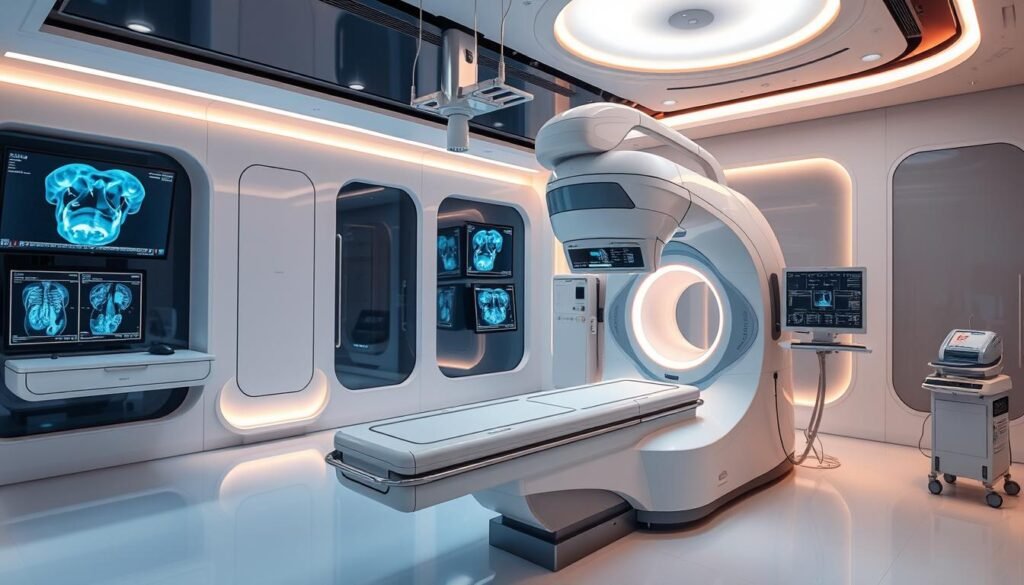
Comparing HDR and Other Brachytherapy Types
Comparisons between HDR and LDR Brachytherapy highlight differences in treatment time and success. These treatments target cancer cells in unique ways. Factors from each type could affect what patients and doctors prefer.
High-Dose Rate (HDR) Brachytherapy vs. Low-Dose Rate (LDR) Brachytherapy
HDR Brachytherapy uses intense radiation through tubes in the prostate for a short time. It might be done in one appointment or several over days. LDR Brachytherapy, on the other hand, puts tiny radioactive seeds that work for about six months.
The success rates of both methods are high. HDR has a 96.3% 5-year control rate, and LDR is slightly behind at 95.7%. This shows both are good at managing cancer.
Combination with External Beam Radiation Therapy (EBRT)
Adding EBRT to HDR Brachytherapy can make it even more effective. Research shows such combination therapy reaches high control rates. For example, using HDR with EBRT gave a 97.4% success rate over five years. LDR with EBRT had a 94.7% success rate. This combo might also lower side effects.
HDR and LDR Brachytherapy are both strong options, and knowing the details can help choose the best one. Looking at each patient’s situation with these insights could guide to the best cancer treatment plan. Learn more about their differences here.
Reasons for Choosing HDR Brachytherapy
Many patients with localized prostate cancer look into various treatments. HDR brachytherapy is a top choice. Both patients and doctors prefer it for many reasons.
This treatment sends high doses of radiation right to the prostate. It avoids harming healthy tissue nearby. This method reduces side effects. It also has a quick treatment time of one to two days. So, it barely interrupts daily life.
Patients also benefit from the fast recovery. Most can go back to normal life within a week. This is great for those juggling work and family.
HDR brachytherapy and external beam radiotherapy together can improve results. It targets the cancer well while saving healthy tissues. If cancer comes back, hormone therapy is an option. This makes HDR a popular choice in the fight against cancer.
Though there are possible side effects like issues with urinary, bowel, and sexual functions, they’re less common. A careful team of doctors plans and does the treatment. This ensures safety and good results.
In summary, HDR brachytherapy is liked for its low side effects, fast treatment, and effective radiation delivery. These points make it a preferred choice in prostate cancer care.
| Aspect | HDR Brachytherapy | Other Treatment Options |
|---|---|---|
| Radiation Delivery | High dose directly to prostate | Uniform distribution |
| Treatment Duration | 1-2 days | Weeks to months |
| Recovery Time | 1 week | Variable, often longer |
| Side Effects | Lower overall complication rates | Higher rates in some cases |
| Combination Options | Effective with external beam | Limited combination therapies |
HDR brachytherapy stands out in modern cancer care. It shows a deep understanding of oncology and puts the patient first. For more info on its effectiveness, check out this study.
Patient Criteria for HDR Treatment
Choosing the right patients for HDR Brachytherapy means looking at many factors. We focus on the person’s risk, age, and health. This way, only those who stand to gain the most get the treatment.
Risk Factors and Suitable Candidates
Certain risk factors are key in picking who gets HDR Brachytherapy. These include:
- Age: Usually, those over 65 are good candidates for HDR.
- Gleason Score: This score measures cancer’s aggressiveness to see who’s fit for treatment.
- PSA Levels: High levels suggest a higher risk and need for HDR.
- Overall Health: Being healthy is crucial to handle the procedure well.
The NCCN guidelines help identify low-risk prostate cancer patients. Those with low to medium risk or who can’t have surgery may qualify. This includes patients with more advanced diseases too.
It’s crucial for doctors to review all criteria carefully. This ensures the right care is given, avoiding unneeded treatments. They aim to find the perfect balance for effective yet safe HDR Brachytherapy.
| Risk Factor | Patient Criteria |
|---|---|
| Age | Older than 65 |
| Gleason Score | Low to Intermediate Risk |
| PSA Levels | Elevated but manageable |
| Overall Health | Good health status for procedure |
The HDR Brachytherapy Procedure
Understanding the HDR Brachytherapy procedure is vital for anyone needing prostate cancer treatment. It’s a smart approach that blends accuracy with steps to make patients comfortable. Before starting treatment, several important steps ready the patient.
Preparation for Treatment
The prep for prostate treatment includes many meetings, imaging, and medical checks. Patients might review their meds and diet to best prepare for HDR Brachytherapy. Doctors carefully check for any issues that could affect treatment, including past prostate problems or surgeries.
Some get hormone therapy before the procedure to shrink the tumor, making pellet placement easier. This detailed prep looks at all health aspects before starting treatment.
What to Expect During the Procedure
The HDR Brachytherapy procedure usually lasts 2-3 hours. This time is mostly spent on planning and imaging for precision. Patients lie comfortably as doctors use imaging to insert radioactive tubes accurately into the prostate. This method ensures a quick dose of radiation—about ten minutes—to attack the cancer directly.
After treatment, the body holds no leftover radioactivity. Patients can safely be around others, like kids or pregnant women. Following the treatment, looking out for side effects like pain or urinary issues is important. Staying on top of follow-up visits is key to monitor recovery. To learn more about using radiation in treating prostate cancer, check out this resource.
Recovery After HDR Brachytherapy
Recovering from HDR Brachytherapy means learning about the care you need afterward. This helps keep you comfortable and checks for any side effects. Knowing what complications might happen is key to deal with them quickly and well.
Post-Procedure Care and Side Effects
After this treatment, patients might face several side effects, like:
- Urinary issues: You could have trouble going to the bathroom, feel like you have to go a lot, or see blood. These usually get better in a few days.
- Bowel changes: There might be bleeding or changes in how often you need to go.
- Discomfort: It’s common to feel sore, but this pain usually goes away fast.
There’s also a chance of getting proctitis, which means the rectum gets inflamed. This can lead to unpleasant bathroom visits. Always talk to your doctors about any symptoms. They will help you handle serious issues fast.
Follow-Up and Monitoring
Seeing your doctor regularly after treatment is crucial. These check-ups are about watching your PSA levels and making sure the treatment works in the long run. Depending on your situation, you might need to make changes to your lifestyle or get extra care to recover well.
A good follow-up schedule helps spot any slower-appearing side effects, including the rare chance of getting bladder or rectal cancer. Staying on top of these visits can make a big difference in your recovery and life quality afterward.
| Common Side Effects | Management Strategies |
|---|---|
| Urinary Problems | Stay hydrated, take meds if you feel urgent, and see a specialist as needed. |
| Bowel Changes | Change your diet, use stool softeners, and watch out for serious signs. |
| Discomfort or Pain | Take pain medicine and move gently if possible. |
| Emotional Concerns | Look for counseling and groups for support with mood or anxiety issues. |
Conclusion
High-Dose Rate (HDR) Brachytherapy has become a key treatment for prostate cancer. It has an impressive ability to control the disease. With a 98% success rate at 36 months and 94% at 60 months, it stands out in cancer treatment.
Patient reports show low rates of cancer spreading and high survival without the cancer spreading. This shows the treatment’s strong potential to fight cancer with few bad effects.
HDR Brachytherapy uses a less invasive method. It targets the prostate with high-intensity radiation. This kills tumor cells while not harming healthy tissue nearby. The rules and medical need for this method show its importance in modern cancer treatment.
As research grows, patients are urged to stay up-to-date on prostate cancer treatments. This will help them make smart, personal choices about their care.
HDR Brachytherapy offers hope to those fighting prostate cancer. It also highlights the need for talks between patients and doctors. Working together helps create custom treatment plans using this powerful therapy. Patients should explore all treatments and talk openly with doctors to get the best care in their fight against cancer.