About half of all cancer patients in the US receive radiation therapy. This shows how important these treatments are in fighting cancer. Radiopharmaceuticals focus on killing cancer cells, making them a hopeful choice for prostate cancer treatment. Yet, they can bring side effects similar to those of external beam radiation therapy.
Knowing the side effects of radiopharmaceuticals is key for patients thinking about this treatment. While these treatments may reduce some side effects, they can still be risky. Patients should know about possible negative reactions. Understanding these risks helps patients make smart choices about their treatment.
Key Takeaways
- Half of all cancer patients utilize radiation during treatment.
- Radiopharmaceuticals offer targeted therapy for prostate cancer.
- Side effects can be similar to those of traditional radiation therapies.
- Adverse reactions may lead to complications affecting patient health.
- Understanding side effects is essential for informed treatment decisions.
Understanding Radiopharmaceuticals in Prostate Cancer Treatment
Radiopharmaceuticals are changing how we treat prostate cancer. These drugs use radiation to target cancer cells exactly. This means they can treat tumors without hurting nearby healthy areas. This is very useful for patients with metastatic prostate cancer. This cancer type can spread to many body parts, like the bones.
In 2022, it’s expected that 268,490 men in the United States will get a prostate cancer diagnosis. This makes it the second most common cancer among men. Radiopharmaceutical treatments like Lutetium-177 PSMA-617 offer new hope. They are made for treating castration-resistant metastatic prostate cancer that has PSMA receptors.
Radiopharmaceuticals can ease pain and help people live longer when cancer has spread to bones. Specific treatments like Strontium-89 chloride and Samarium-153 lexidronam are for pain relief. Radium-223 dichloride is notable for helping patients live longer. It’s used mainly when the cancer affects the bones.
However, it’s hard to get these treatments to everyone who needs them. We need good systems to deliver these radioactive drugs. The development of alpha emitters like actinium-225 shows progress in treating prostate cancer.
Radiopharmaceutical therapy is personal and flexible, great for patients resistant to hormones. Patients usually get a few injections over weeks. Experts think we should use these treatments more and earlier in the cancer fight.
If you have prostate cancer, knowing about radiopharmaceuticals can help you choose your treatment. As research goes on, we hope to find even better ways to help patients. For more info on the latest in this field, check this article on PSMA-directed therapy here and about radiation therapy here.
How Radiopharmaceuticals Work in Targeting Cancer Cells
Radiopharmaceuticals are a big step forward in radioisotope therapy. They target cancer cells with amazing accuracy. These treatments use radioactive isotopes and targeting molecules. They send radiation right to the tumors. An example is Lutetium Lu-177 VIPIVOTIDE TETRAXETAN, also known as Pluvicto. It finds prostate cancer cells by connecting with the prostate-specific membrane antigen (PSMA).
The way it works is simple. These drugs get injected into the bloodstream. Then they find and stick to cancer cells with specific proteins, like PSMA. This helps to bring radiation directly to cancer cells, destroying them. It also keeps healthy tissues safe. So, patients have fewer bad side effects. This makes targeting cancer cells with radioisotope therapy a good choice.
Studies show drugs like Lu177-PSMA-617 really help patients. They slow tumor growth more than other treatments. This method not only works well but also opens doors for new research. It combines radiopharmaceuticals with different treatments, making cancer care better.
To learn more about radiopharmaceuticals and their benefits, check out studies at the National Cancer Institute’s resources.
Side Effects of Radiopharmaceuticals
The use of radiopharmaceuticals in treating prostate cancer has big benefits. But, it also has its challenges. We must know the side effects to keep patients safe and comfortable.
This section looks at the usual side effects and the rare, serious ones that might happen.
Common Side Effects
Many patients report common side effects. These effects often include:
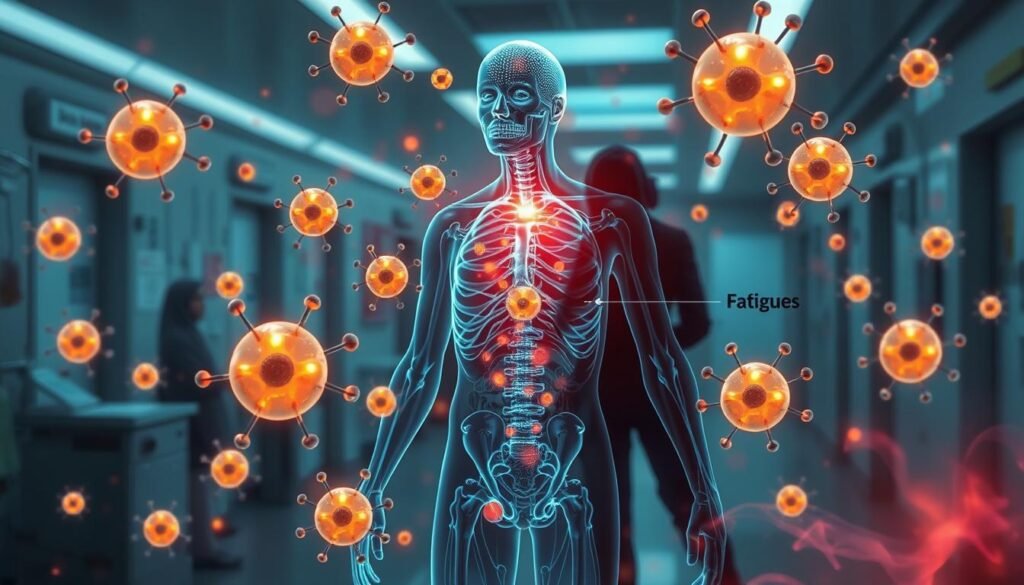
- Fatigue
- Dry mouth
- Reducing blood cell counts, leading to an increased risk of bleeding and infections
- Nausea and vomiting
- Injection site pain
These side effects can change a patient’s life. Knowing about them helps patients and healthcare teams manage symptoms better. This improves well-being.
Less Common but Serious Side Effects
Some patients face severe reactions. Though rare, these reactions can lead to serious conditions. For example, Technetium-99m Fanolesomab was withdrawn because of severe reactions. Serious side effects include:
- Severe fatigue and malaise
- Gastrointestinal complications
- Renal failure
- Loss of consciousness
- Severe skin reactions, including generalized erythema and urticaria
- Anaphylactic reactions and angioedema
The British Nuclear Medicine Society provides stats. They note adverse reactions were 3.1 per 100,000 in 2013. By 2015, it decreased to 2.5 per 100,000. Monitoring patients closely is key.
Comparison with Traditional Radiation Therapy
The world of cancer treatment is changing with new radiopharmaceuticals. These offer an alternative to old-school methods like external beam radiation therapy (EBRT) and brachytherapy. Unlike those traditional therapies, radiopharmaceuticals are less likely to harm healthy cells. This results in fewer side effects for patients.
Radiopharmaceuticals offer a new way to fight cancer. They target cancer cells directly, reducing harm to the rest of the body. Patients often see results faster with this therapy. They can notice improvements after just a few injections. This is a big change from the long treatment periods seen with traditional therapies.
Clinical trials show that radiopharmaceuticals tend to have milder side effects than chemotherapy or traditional radiation. Notable drugs like FDA-approved Radium-223 dichloride (Xofigo®) and Lutetium-177 (Lutathera®) lead the way. They show how new treatments can make prostate cancer care better, with fewer complications.
For cancers that are hard to treat, radiopharmaceuticals offer a new hope. They can be used when other treatments don’t work. The recent approval of new drugs for different cancers highlights their growing potential. This marks a big step forward in how we treat cancer, opening doors to more effective care.
Potential Benefits of Using Radiopharmaceuticals
Radiopharmaceuticals bring unique advantages to cancer care, unlike traditional treatments. They target cancer cells directly, saving the healthy ones. This method lessens side effects and improves the treatment’s effectiveness. It’s a good choice for many patients.
Targeting Cancer at the Cellular Level
Radiopharmaceuticals deliver therapy right where it’s needed, without harming healthy cells. This precise approach aims at tumor cells, possibly leading to better outcomes. It could outperform traditional methods.
Reducing Radiation Exposure to Healthy Cells
Personalized medicine helps make radiopharmaceuticals specific to each tumor. This approach minimizes radiation to healthy tissues. By adjusting doses, even to as low as 0.185 megabecquerels for diagnosis, the focus is on safety.
The table below shows how radiopharmaceuticals compare to traditional treatment in terms of radiation, precision, and side effects:
| Treatment Method | Radiation Exposure | Targeting Precision | Systemic Side Effects |
|---|---|---|---|
| Traditional Radiation Therapy | Higher exposure levels | Less precise | More systemic side effects |
| Radiopharmaceutical Therapy | Similar or lower than X-ray | Highly targeted | Reduced systemic side effects |
Radiation Exposure Risks Associated with Radiopharmaceuticals
Radiopharmaceuticals bring new hope for prostate cancer treatment. But, they come with radiation exposure risks. These risks need careful thought. Patients might deal with ionizing radiation. This can harm not just them but also those close by. Knowing about radiopharmaceutical toxicity helps in making wise treatment choices and understanding possible side effects.
No clear cancer risk has been seen in people at low radiation levels. Yet, the linear, no-threshold model warns any small amount of radiation carries cancer risk. U.S. regulatory bodies use this model for safety. They focus on keeping track of patient radiation levels.
Understanding the safety concerns of radiopharmaceutical treatments is vital. Early radiation effects can cause skin issues and nausea from high doses quickly. But, cancer and genetic impacts can appear later, after smaller doses.
| Type of Radiation Injury | Characteristics |
|---|---|
| Acute Radiation Injury | Symptoms include skin reddening, hair loss, nausea, and more severe outcomes at high doses. |
| Late Radiation Injury | Includes cancer and hereditary effects, often observed after lower doses over longer periods. |
Studies on radiation’s long-term effects often look at atomic bomb survivors. But, applying these findings to others can be tricky. This is due to different radiation types and exposures. Facilities use regular monitoring and safety steps to lower risks for both patients and workers.
The U.S. Nuclear Regulatory Commission sets strict safety rules. They limit how much radiation workers can be exposed to. They also require dose measurements for patients. Authorized Users oversee safe radioactive material use. This highlights the ongoing need for education in radiation safety.
Understanding how prostate cancer treatment affects erectile function is key for many men. Knowing more about this relationship can improve physical and emotional health. Relevant studies provide important insights, like this resource mentions.
Nuclear Medicine Safety Measures
Nuclear medicine safety is key for patient well-being during radiopharmaceutical treatments. Healthcare providers follow strict safety protocols. They aim to maximize benefits and minimize radiation exposure risks.
Patients learn about radiation protection in nuclear medicine before procedures. They understand examination expectations, radioactive material purposes, and post-procedure precautions. This knowledge reduces anxiety and emphasizes safety importance.
Monitoring patients during and after treatment is vital for nuclear medicine safety. Experts make sure patient comfort and safety are top priorities. Most reactions to these procedures are mild and quick to resolve.
Many patients feel minimal discomfort, mostly from staying still for images.
Children and pregnant women have special protocols. Parents help keep children still for accurate results. Pregnant women have techniques that lower fetal radiation exposure but allow needed tests.
Proper disposal of radioactive materials after procedures is crucial. This prevents healthcare setting contamination. Radiation from scans mostly leaves the body by the next day. Patients must follow discharge advice closely.
| Safety Measure | Description |
|---|---|
| Patient Education | Informing patients about the procedure, radioactive materials, and safety practices. |
| Monitoring | Continuous oversight during treatment to ensure patient comfort and safety. |
| Disposal Protocols | Safe handling and disposal of radioactive materials to prevent contamination. |
| Post-Procedure Guidelines | Instructions to minimize radiation exposure to others and ensure recovery. |
Over 20 million Americans get help from nuclear medicine each year. This shows its safety and effectiveness in diagnosis and treatment. The nuclear medicine field continues to put patient safety and care first through strict safety protocols and guidelines.
Conclusion
This article discussed radiopharmaceuticals and their role in treating prostate cancer. These treatments target cancer cells directly but have side effects. It’s key to manage side effects like rash, itching, and vomiting.
From January 2007 to December 2016, studies showed few reactions to these treatments. No deaths were linked to radiopharmaceuticals in the U.S. Advancements in this field are making treatments safer and more effective. Patients should talk to their doctors to get the most benefit while minimizing risks.
It’s crucial to balance treatment effectiveness with patient safety. The article showed that working together, patients and doctors can make better choices. This teamwork can improve the results of prostate cancer treatments.