Nearly 1 in 9 men will face prostate cancer during their lives. Having trouble urinating is a key warning sign. It not only causes discomfort but also indicates serious prostate issues. Sadly, many ignore this symptom until the cancer has progressed. Knowing about it early on leads to better treatment chances for those with prostate cancer.
It’s critical to understand how trouble with urination links to prostate health. Recognizing these signs early allows for quicker action in getting medical help. This can address prostate concerns promptly. For more details, explore additional resources.
Key Takeaways
- Difficulty urinating affects many men diagnosed with prostate cancer.
- Early recognition of symptoms can lead to better management of prostate cancer.
- The link between urinary issues and prostate health should not be overlooked.
- Regular screenings are vital for early detection.
- Understanding prostate cancer symptoms can empower individuals to seek timely help.
Understanding Prostate Cancer
Prostate cancer is a common cancer in men. It starts when prostate cells grow too fast, forming tumors. The prostate is below the bladder, making seminal fluid for reproduction.
Knowing about prostate cancer means understanding who is at risk. Men over 50 face a higher risk. If your family has a history of it, your risk increases. Ethnicity matters too, with African American men having higher diagnosis rates.
Keeping the prostate healthy is key to well-being and reproduction. Finding and treating cancer early makes a big difference. It’s vital for men to know the symptoms and risks as they get older.
Common Symptoms of Prostate Cancer
Prostate cancer’s signs can be hard to notice at first. Having trouble while urinating is one key indicator. This issue might present as a weak or uneven flow of urine.
Another common concern is needing to pee often, especially at night. These problems with urination show there could be a deeper issue at play.
Sometimes, urinating can cause pain which is a sign that shouldn’t be ignored. Finding blood in your urine is also a serious symptom. Spotting these signs early can really help with treatment.
Knowing what these symptoms mean is very important. Not paying attention to changes like troubled urination, pain, or blood in your urine can be risky. For more on this topic, check out this source.
Difficulty Urinating: A Common Symptom of Prostate Cancer
Having trouble while peeing is a key sign of prostate cancer symptoms for many. People might feel a strong need to pee suddenly. They might also notice their pee stream stops and starts. Or, they may not feel like they’ve emptied their bladder fully.
This problem often comes from the prostate getting bigger. It can squeeze the pee tube, causing blockages. If going to the bathroom becomes more frequent at night, it can affect sleep and life quality.
Noticing these symptoms is vital. They hint at problems with prostate health. Doctors highlight talking about any changes in how you pee. Such changes give clues to health issues below the surface.
Causes of Urinary Difficulties
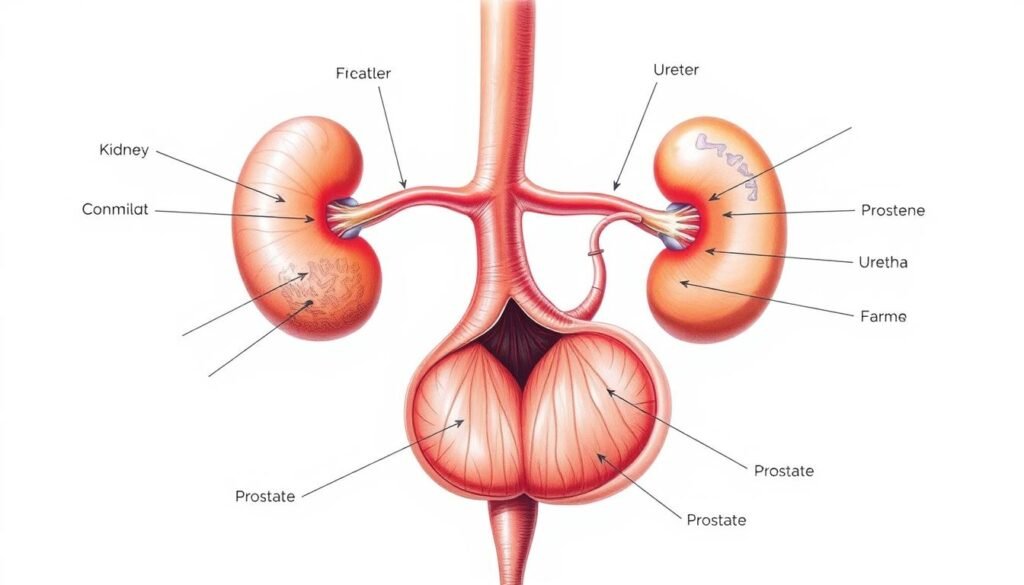
Knowing why urinary problems happen is key for those facing these issues. A major cause is the growth of the prostate, known as benign prostatic hyperplasia (BPH). This condition is common in aging men and leads to urinary troubles. It’s also important to understand the urinary tract’s layout. This helps see how prostate changes block urine flow.
Prostate Enlargement Explained
The prostate gland gets bigger, often squeezing the urethra. This squeeze affects how urine flows, causing problems like:
- Frequent urination
- Difficulty starting or stopping urination
- Weak urine stream
- Feeling of incomplete bladder emptying
These signs show how prostate growth affects the urinary system. Understanding this link is key to noticing health changes related to urinary problems.
Anatomy of the Urinary Tract
The urinary tract has several parts working together to remove waste. Important parts include:
- Kidneys: They filter blood and make urine.
- Ureters: Tubes carrying urine from the kidneys to the bladder.
- Bladder: Stores urine until it leaves the body.
- Urethra: The final passage for urine to exit.
The prostate sits below the bladder, encircling the urethra. As it grows, it can block urine flow through the urethra. Knowing about the urinary tract helps understand how prostate growth causes issues.
Identifying Urinary Symptoms
Recognizing different urinary symptoms is key in spotting potential prostate issues. Symptoms like frequent urination and urgency often signal underlying problems. Understanding what painful urination is can also aid in monitoring one’s health effectively.
Frequent Urination vs. Urgency
Frequent urination means needing to go more often, both during the day and night. This can interrupt daily activities and sleep, causing stress. Urgency is the sudden, strong need to urinate, which might make you worry about reaching a restroom in time. Urinary symptoms such as these may happen on their own or together, making things more complex.
- Frequent Urination: More trips to the bathroom than normal.
- Urgency: A pressing need to urinate immediately.
Painful Urination: What to Look For
Painful urination, or dysuria, involves discomfort or pain while urinating. Various issues, like inflammation or infection, can cause this. Noticing the severity and location of pain is crucial. This awareness helps doctors diagnose accurately and decide on the best treatment.
- Characteristics of Painful Urination:
- Burning or stinging feeling.
- Pain concentrated around the bladder.
- Discomfort during the whole urination process.
Getting to know these symptoms is crucial. It helps you communicate better with healthcare providers. This ensures timely help and possible treatments for urinary issues.
| Symptom | Description | Possible Causes |
|---|---|---|
| Frequent Urination | Makes you urinate more often than usual. | Enlarged prostate, bladder infection, diabetes. |
| Urgency | A sudden, compelling need to urinate. | Overactive bladder, urinary tract infection, prostate cancer. |
| Painful Urination | Causes discomfort or pain during urination. | Infection in the urinary tract, sexually transmitted infections, prostatitis. |
Importance of Early Detection
Finding prostate cancer early is key to successful treatment. Catching it when it’s just beginning improves chances of beating it. Tests like the PSA are useful for keeping an eye on your prostate.
It’s smart to pay attention to your body. Having trouble when you pee could mean it’s time to see a doctor. Knowing what signs to look for can lead to catching cancer early.
Getting regular check-ups is good. It helps you talk openly with your doctor about any pee problems. This opens up ways to prevent issues and supports your prostate health.

In short, spotting prostate cancer early gives people a better chance in their battle. It’s vital for a better life and positive health results.
PSA Levels and Prostate Health
Knowing about PSA levels is key for checking prostate health. The PSA test checks this protein in your blood. A high PSA level could mean inflammation, enlargement, or even cancer in the prostate. This calls for more checks.
It’s important to keep an eye on PSA levels regularly. Men are advised to start this test at 50, or sooner if they’re at risk. Knowing your PSA level helps you understand and handle possible prostate problems better.
What your PSA result means is big. Doctors use it to decide if you need more tests like a biopsy to check for cancer. Understanding this can help you be more proactive about your health.
| PSA Level Range | Interpretation | Next Steps |
|---|---|---|
| 0 – 2.5 ng/mL | Low risk for prostate issues | Routine monitoring |
| 2.6 – 4.0 ng/mL | Average risk; may require further testing | Consider repeat testing and evaluation |
| 4.1 – 10 ng/mL | Increased risk; potential for prostate cancer | Further diagnostic procedures recommended |
| Above 10 ng/mL | High risk for prostate cancer | Urgent follow-up and possible biopsy |
PSA tests are a key part of keeping your prostate healthy. Regular checks can find problems early. This leads to better treatment outcomes.
When to Seek Medical Advice
Knowing when to get help is key to keeping your prostate healthy. If you notice certain symptoms, it’s time to pay attention. Acting on these signs early can help manage them better. It’s really important for people who are more likely to have prostate issues.
Recognizing Warning Signs
It’s important for men to watch out for symptoms that mean a doctor’s visit is needed. Some signs that need quick action include:
- Progressive difficulty urinating; this might worsen over time.
- Painful urination accompanied by fever or blood in urine.
- Changes in urinary habits, such as increased frequency during the night.
Being aware of these can lead to faster help from doctors about prostate health.
Scheduling a Prostate Screening
Talking to a doctor about prostate screening is smart for those at risk. Early detection through regular checks can make a big difference in treatment. Knowing when to seek medical advice makes you better at taking care of your health.

In short, noticing early signs and getting regular checks are key for prostate health. If you’re worried about any symptoms, getting advice from a doctor is a must.
Advanced Prostate Cancer Symptoms
Knowing the signs of advanced prostate cancer is key to managing it. Patients might see different prostate cancer symptoms that show the disease is advancing.
Common symptoms include:
- Bone pain: This happens when cancer spreads to the bones. It causes discomfort and pain in several areas.
- Weight loss: Losing weight without trying can be a sign of changes in the body from cancer growth.
- Fatigue: Feeling more tired than usual is common. It makes daily tasks hard and lowers life quality.
- Urinary issues: Late-stage cancer may make it hard to urinate or cause the need to go more often.
There are other widespread signs too:
- Swelling: If cancer affects lymph nodes, swelling can happen in legs or other body parts.
- Loss of appetite: Many men find they don’t want to eat, which also leads to losing weight.
Being aware of these symptoms helps in getting medical care early. This makes it possible to find the right treatment. Knowing how prostate cancer changes can improve the lives of those dealing with it.
Living with Urinary Difficulties
Many people find living with urinary difficulties tough, especially with prostate issues. Symptoms like a weak stream when peeing or needing to go often can be hard to handle. Knowing how to deal with these symptoms is key to feeling better.
Changing your lifestyle can make a big difference in handling urinary problems. Eating right, drinking enough water, and staying active help your prostate stay healthy. These changes are good for your body and mind, making you feel more upbeat.
Practices like yoga or meditation can help manage stress, which might make urinary symptoms worse. Having people to talk to is important too. Sharing what you’re going through with friends, family, or groups can provide support and lessen loneliness.
Doctors are crucial in managing urinary issues. Seeing them regularly helps keep track of symptoms and any changes in your prostate health. Being open about what you’re experiencing lets them evaluate you better and explore treatment options. For more info on prostate health symptoms, check this resource.
| Coping Strategy | Description | Benefits |
|---|---|---|
| Balanced Diet | Includes plenty of fruits, vegetables, and whole grains. | Improves overall health and supports prostate function. |
| Regular Exercise | Consistent physical activity, like walking or swimming. | Enhances mood and reduces stress. |
| Mindfulness Practices | Methods such as meditation or yoga. | Helps in managing stress and anxiety levels. |
| Support Groups | Connecting with others facing similar challenges. | Provides social support and shares coping strategies. |
It’s vital to understand and tackle urinary problems related to prostate health. Being open and working with doctors can help in managing these issues better. This leads to a better life quality.
Treatment Options for Prostate Cancer
Treatment options for prostate cancer depend on the disease stage and overall health. These can include surgery, radiation therapy, hormonal therapy, and active surveillance. It’s key for patients to talk with their doctors to understand each treatment’s pros and cons.
Managing Urological Symptoms
Managing symptoms improves life for patients with prostate cancer. Treatments can reduce pain, control urination, and help with sexual issues. Seeing a healthcare provider regularly to update the treatment plan is vital.
Latest Advances in Treatment
New techniques are changing the game for prostate cancer treatment, leading to better results for patients. Genomic testing tailors treatments to the individual. Also, promising methods like immunotherapy and targeted therapy are now options. For more insights, check the Mayo Clinic.
| Treatment Option | Description | Potential Benefits |
|---|---|---|
| Surgery | Removal of the prostate gland | Long-term cancer control |
| Radiation Therapy | Uses high-energy waves to target cancer cells | Pain relief and smaller tumor size |
| Hormonal Therapy | Reduces levels of male hormones | Slows cancer growth |
| Active Surveillance | Regular monitoring without immediate treatment | Avoids side effects from unnecessary treatment |
Support and Resources for Patients
Being diagnosed with prostate cancer can be overwhelming. It’s critical to find support for prostate cancer patients. Many organizations and communities provide help during this tough time.
Support groups allow people to share experiences and talk about treatments. They also help foster friendships. The Prostate Cancer Foundation and the American Cancer Society give resources, such as websites and hotlines. Joining these groups can reduce feelings of being alone and scared.
Educational materials give patients power over their treatment decisions. Talking about symptoms with doctors helps patients understand the disease. Journals and online tools are key for learning about treatments and life changes.
There are financial aid programs for treatment costs too. Many charities have grants for prostate cancer patients. These grants help with the financial burden of treatment.
Having the right resources for patients can make a big difference in coping with prostate cancer. It’s crucial to use these networks and supports. They ensure thorough care and bring peace of mind during treatment.
Conclusion
It’s vital to know that trouble peeing can mean prostate cancer. This symptom is key but often missed. Spotting it early can alert individuals to get checked.
Getting prostate issues checked early is crucial. It lets people get help fast, before problems grow. This can save lives by catching cancer sooner.
To sum up, being aware of pee problems matters a lot. Talking to doctors about any odd symptoms is key. This helps catch serious issues early, for better health ahead.