Did you know that about 1 in 8 men will be diagnosed with prostate cancer in their lifetime? This fact shows how common this cancer is. It’s important for men to know the early signs to fight it effectively.
Early on, prostate cancer might not cause any symptoms. But, symptoms could include problems like a weak urine flow or needing to pee more often, especially at night. Knowing these signs and getting regular check-ups, like a digital rectal exam, can help catch it early. This early detection could save your life.
Key Takeaways
- 1 in 8 men will be diagnosed with prostate cancer in their lifetime.
- Most prostate cancers are found early through screenings.
- Symptoms of early prostate cancer may include urinary issues.
- Men over age 65 are more likely to be diagnosed.
- Consultation with a healthcare provider is essential for symptom evaluation.
Understanding Prostate Cancer
Prostate cancer is a major concern for men, being the top non-skin cancer in the US. It begins when prostate gland cells grow unnaturally. This gland is key for male reproductive health, making important semen components.
Prostate cancer usually grows slowly and might not cause symptoms for years. Testosterone and similar hormones encourage this growth. They make prostate cells grow. When these cells mutate, they can grow uncontrollably, leading to a tumor.
Knowing how the prostate gland works is crucial for early cancer detection and treatment. Regular screenings help monitor prostate health. Spotting changes early can improve treatment success significantly.
For more info on symptoms and risks of prostate cancer, check trusted medical sources. Spotting symptoms early can help manage the disease better and improve treatment options.
Prostate cancer risk factors include age, genetics, and lifestyle. The risk goes up for men over 65. Understanding these factors helps make informed health decisions.
Keeping an eye on prostate health and symptoms enables seeking timely medical advice. This can lead to early diagnosis and treatment. Knowing what is prostate cancer is key to taking control of your health.
Remember, prostate cancer affects everyone differently. Access to healthcare and life habits greatly influence diagnosis and treatment success. Men should strive to understand their health and how prostate cancer fits into their overall well-being.
Who is at Risk for Prostate Cancer?
Prostate cancer has different risk factors. Age plays a big role, with most cases found in men over 65. As men get older, their chance of getting prostate cancer goes up significantly.
Racial background also matters a lot in prostate cancer cases. African American and Caribbean men of African descent are more likely to get and die from this disease. It’s important to understand this to improve prevention.
Family history is another key factor. If a man’s father or brother had prostate cancer, his own risk more than doubles. Some genes, like BRCA1 or BRCA2, can also increase the risk.
Eating a lot of dairy products might slightly raise a man’s risk. Yet, being obese doesn’t seem to affect the overall chance of getting prostate cancer much.
Environmental factors may contribute too. Studies have looked at substances like arsenic and conditions like prostatitis. There’s mixed evidence about sexually transmitted infections being linked to prostate cancer.
A link between vasectomies and a small rise in risk has been found. But scientists are still studying this connection. Understanding all these risks is key to better prevent and manage the disease.
Early Signs of Prostate Cancer: What to Look For
Knowing early signs of prostate cancer can make treatment more effective. Often, symptoms are not obvious at first. But spotting them early can make a big difference.
Common Symptoms in the Early Stages
As the cancer grows, symptoms can appear. Here are some common ones:
- Frequent urination: Needing to pee more often, especially at night.
- Difficulty starting or stopping urination: Having trouble beginning or ending peeing.
- Weak urine stream: The pee flow is not as strong as before.
These signs point to possible problems, such as cancer.
Less Common Symptoms
There are also other symptoms of prostate cancer to watch out for:
- Blood in urine or semen: This is a serious sign and needs quick action.
- Pain during ejaculation: This issue can impact life quality and could hint at cancer.
- Pain in the lower back or legs: This discomfort can be linked to prostate problems.
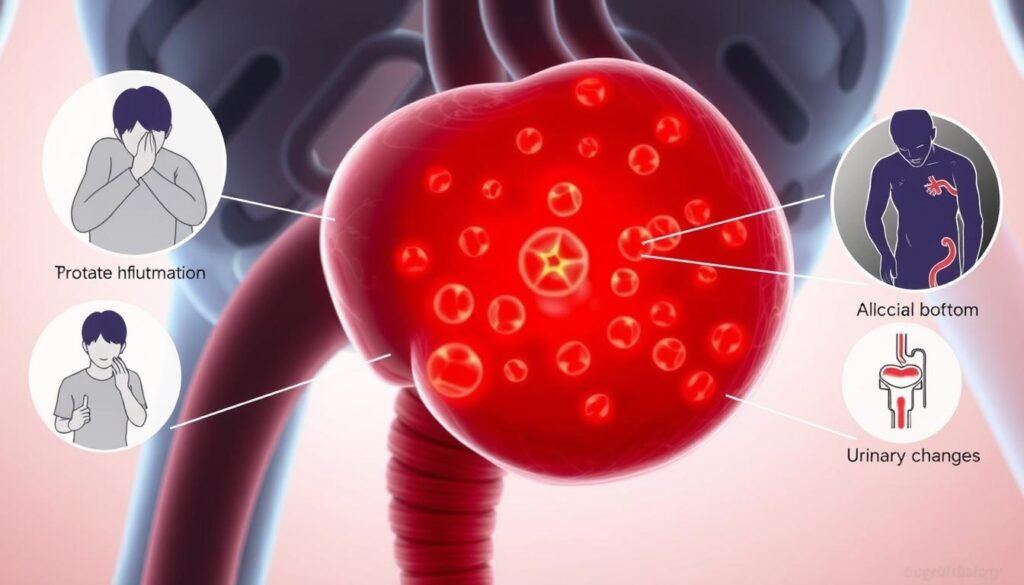
It’s important to recognize these early signs. Talking to a healthcare provider regularly is key. This is especially true for those at high risk.
Prostate Cancer Symptoms and Their Implications
Knowing the signs of prostate cancer is key to better health. Catching it early makes treating it easier. Sometimes, these symptoms can be mistaken for other issues like BPH. This makes it hard to spot the warning signs.
The Importance of Early Detection
Many people with prostate cancer don’t show symptoms at first. Around 94% find out they have it through tests, not symptoms. Tests like the PSA blood test and DRE help catch it early. Without these tests, many wouldn’t know they have cancer until it’s more advanced.
Distinguishing Symptoms from Other Prostate Issues
Knowing what symptoms might mean cancer is crucial. It’s especially true since some can be similar to BPH symptoms. Paying attention to specific signs is important:
- Strong urge to urinate.
- Frequent nighttime urination.
- Pain or burning sensation during urination.
- Blood in urine or semen.
- Painful ejaculation.
If you notice these symptoms, see a doctor. They can help figure out if it’s cancer. Early diagnosis and treatment can greatly improve your chances.

| Symptoms | Possible Conditions |
|---|---|
| Strong urge to urinate | Prostate cancer, BPH |
| Frequent nighttime urination | Prostate cancer, BPH |
| Pain or burning when urinating | Prostate cancer, UTI |
| Blood in urine or semen | Prostate cancer, Infection |
| Painful ejaculation | Prostate cancer, Inflammation |
Knowing these differences helps you get the right help quickly. Being aware of cancer signs helps you manage your health better.
How is Prostate Cancer Diagnosed?
Doctors use multiple methods to check the prostate gland for cancer. These tools help spot any issues and decide what to do next.
Digital Rectal Exam (DRE)
A digital rectal exam is key in checking prostate health. A doctor puts a lubricated, gloved finger into the rectum to feel the prostate. This helps find any unusual changes in size, shape, or feel that could mean cancer.
PSA Levels and Blood Tests
The PSA blood test is also crucial for finding prostate cancer. It checks the level of a specific antigen in the blood. Usually, PSA levels should be under 4 ng/mL. High levels might mean cancer, leading to more tests. A PSA level between 4 and 10 suggests a 25% chance of cancer. Levels above 10 increase this chance even more.
Prostate Biopsy Procedures
If tests show possible cancer, doctors may do a prostate biopsy. A urologist takes small tissue samples with a needle. These samples are checked under a microscope to look for cancer cells. The results take about one to three days. Sometimes, more biopsies are needed if the first one doesn’t find cancer but it’s still suspected.

Treatment Options for Early Prostate Cancer
When someone has early prostate cancer, they face many treatment paths. These depend on their health, how aggressive the cancer is, and side effects. Low-risk patients may choose active surveillance. This means doctors watch the cancer without treating it right away.
Radical prostatectomy is a key surgical choice. It involves removing the prostate gland entirely. It works well if the cancer hasn’t spread outside the prostate. Then there’s radiation therapy, including brachytherapy and external beam radiation. These aim at cancer cells but try to protect healthy tissue. This helps in faster healing.
Sometimes, doctors might suggest hormonal therapy. It stops the hormones that can make the cancer grow. Talking with healthcare experts helps patients understand their options. This ensures choices are well-informed and suited to their situation. For deeper insights into treatments, visit considering treatment options.
Monitoring and Follow-Up Care
After treating prostate cancer, it’s vital to keep an eye on your health. This means regular doctor visits and tests to spot any return or spread of cancer. Tests like PSA and imaging studies help track your health.
Active surveillance is a key method for keeping watch on prostate cancer that hasn’t spread. It lets patients wait on treatment while doctors closely watch the cancer. This approach includes blood tests and MRI scans to catch any changes early. For those with advanced cancer, doctors might use imaging more often.
Follow-up care also focuses on lifestyle and mental health. These are key for dealing with cancer’s emotional impact. Support groups offer a place to find emotional support and hear from others facing similar challenges.
For patients under active surveillance, it’s crucial to know how to track cancer’s progress. Doctors often suggest check-ups every three to six months. These check-ups look at PSA levels and help in making timely decisions for treatment. Click here for more on monitoring prostate cancer
| Monitoring Method | Frequency | Purpose |
|---|---|---|
| PSA Tests | Every 3-6 months | Assess cancer progression |
| MRI Scans | As recommended | Evaluate cancer growth |
| GP Visits | Annually or as needed | General health and guidance |
| Support Groups | Ongoing | Emotional and psychological support |
Understanding Advanced Prostate Cancer
Advanced prostate cancer is a stage where the cancer has spread beyond the prostate. It can reach vital areas like bones and lymph nodes. Recognizing symptoms early is crucial for timely treatment. This cancer stage involves risks and needs careful treatment planning.
Symptoms and Risks Associated with Advanced Stages
Symptoms of advanced prostate cancer can greatly affect one’s quality of life. These symptoms commonly include:
- Bone Pain – This is a key symptom when cancer reaches the bones, causing discomfort in the spine, pelvis, and ribs.
- Fatigue – A significant tiredness that can hinder daily activities.
- Urinary Issues – Problems include difficulty urinating, going often, and blood in urine or semen. This happens when the bladder is affected.
- Lymph Node Swelling – Spread to lymph nodes results in visible swelling and pain.
- Symptoms Related to Other Organs – Cancer can spread to the liver or lungs, causing nausea, abdominal pain, poor appetite, jaundice, a persistent cough, or breathlessness.
- Digestive Problems – Rare cases might experience constipation or abdominal pain if the cancer reaches the bowel.
It’s vital to understand the risks of advanced prostate cancer. The outlook varies greatly depending on how far the cancer has spread, treatment response, and overall health. Regular check-ups and a team of specialists like urologists, oncologists, and radiologists are key to managing advanced prostate cancer effectively.
Conclusion
Early detection of prostate cancer is key to better outcomes. Knowing the signs, like trouble peeing or seeing blood, helps. Go see a doctor quickly if you have these signs. Tests like the PSA blood test and digital rectal exams help a lot.
Men over 50 or those with a family history of prostate cancer should get checked often. Talks with doctors about prostate health are also crucial. Understanding prostate cancer more deeply helps us deal with it better. That way, we can fight against it more effectively.
To stay healthy, being alert and advocating for yourself is important. Catching it early lets men live better lives despite the disease. Let’s all work towards a future where prostate health is a priority.