Do you know that a man’s prostate can grow as large as a lemon by age 60? This fact highlights the need to understand prostate symptoms and their effect on health. It’s key to know this as many men face prostate issues, especially as they get older.
This guide acts as a navigational tool. It aims to help spot common prostate symptoms and what they could mean. It covers benign prostatic hyperplasia (BPH) and the more severe topic of prostate cancer. Knowing these signs is essential. It means you can seek help early and get effective treatments to keep your prostate healthy.
Key Takeaways
- Prostate growth is common, affecting many men as they age.
- Prostatitis affects at least half of all men at some point in their lives.
- BPH leads to frequent urination, especially at night.
- Prostate cancer may not exhibit symptoms until more advanced stages.
- Understanding symptoms can facilitate earlier medical intervention.
Understanding the Prostate Gland
The prostate gland is key in the male reproductive system. It sits below the bladder and in front of the rectum. It helps make semen, which carries sperm.
In younger men, a healthy prostate is about the size of a walnut. As men get older, it can grow to the size of a lemon.
Knowing about the prostate helps in understanding prostate health. The prostate starts to grow around age 25. Symptoms often start to show by age 40.
Statistics show that by age 60, half of men will have an enlarged prostate. This goes up to 90% for men over 80. About 8 in 10 men will face this condition eventually.
As men get older, issues like benign prostatic hyperplasia (BPH) become more common. BPH can make you go to the bathroom a lot, especially at night. It can also make it hard to pee. Taking care of your prostate is very important.
For more details on managing prostate issues and hormone therapy, check out this resource.
Common Prostate Symptoms
It’s crucial for men to understand prostate symptoms, particularly as they age. They might face urinary issues. These could mean there’s an underlying prostate problem, like enlargement. Spotting these symptoms early can help in getting the right medical help quickly.
Frequency of Urination
One major sign is going to the bathroom more often, especially at night. This is called nocturia. Those with an enlarged prostate might have to wake up many times to pee. It’s not only annoying; it might also mean there’s a health problem that needs checking.
Difficulty Starting or Maintaining Urination
Starting to pee or keeping the flow steady can be tough for some men. They might find their urine stream is weak. Or they may struggle to start peeing. These issues could point to an enlarged prostate pressing on the urethra. Noticing this symptom is key for spotting prostate problems early.
Burning Sensation During Urination
Feeling a burn while peeing can be alarming. It usually suggests inflammation, a urinary infection, or irritation. Don’t ignore this symptom. It could mean you have prostatitis or another prostate issue. Recognizing this pain is important for catching prostate problems early.
Prostate Health Changes with Age
As men get older, their prostate health often changes. This gland can grow, leading to benign prostatic hyperplasia (BPH). By age 50, about 50% of men may face such changes, causing urinary problems.
Symptoms can include:
- Difficulty urinating
- Weak urine stream
- Frequent need to urinate, especially at nighttime
- Infections within the urinary tract
- Stones in the bladder
Prostate health is strongly linked to age. Nearly 25-30% of men with an enlarged prostate have troubling symptoms. Being aware early helps manage these effectively. Going for regular health checks is key for timely detection and better life quality.
Dr. White suggests that men start getting checked yearly at age 50. These checks should include a PSA blood test and a rectal exam. Prostate cancer is common, so early screenings are important. They greatly improve the chances of beating the disease.
Older men might also see a drop in testosterone levels. This can make them feel less energetic and lower their sex drive. Picking the right medication is important as some can worsen prostate problems.
Making better lifestyle choices affects prostate health positively. Less alcohol and caffeine can help control frequent urination. Talking openly with doctors about any symptoms is vital for good prostate health management as men age.
Benign Prostatic Hyperplasia (BPH)
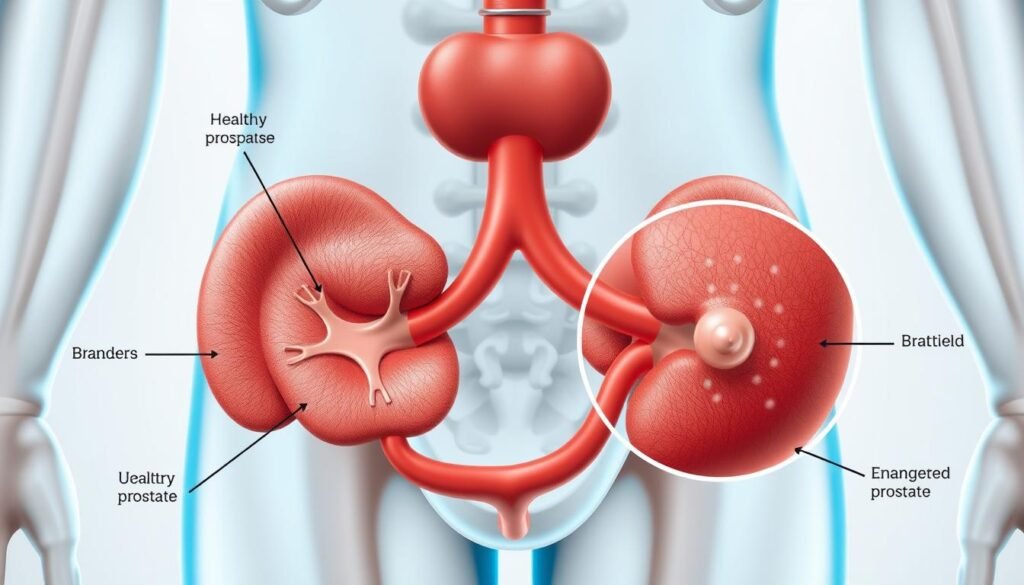
Benign Prostatic Hyperplasia, or BPH, is a common issue in older men. It’s when the prostate gland gets bigger but isn’t cancerous. BPH can cause problems with urination. Knowing about BPH helps in dealing with its symptoms better.
What is BPH?
BPH is the prostate getting larger with age. It’s not cancer, but it needs attention. Men with family history of prostate problems, diabetes, or obesity are at higher risk.
Symptoms of an Enlarged Prostate
It’s important to know the signs of an enlarged prostate. Symptoms to watch for include:
- Frequent urination, especially at night
- Sudden urgency to urinate
- Difficulty starting or maintaining the flow of urine
- A sensation of incomplete bladder emptying
Talking to a doctor about these symptoms is key. They can guide you to the right treatment.
Prostatitis: Inflammation of the Prostate
Prostatitis is when the prostate gland gets inflamed, affecting many men of different ages. Knowing about it helps recognize symptoms and get the right treatment. It can show up in several ways, each with different effects on health.
Types of Prostatitis
There are four main kinds of prostatitis, which are:
- Acute bacterial prostatitis: A quick and severe bacterial infection needing fast medical care.
- Chronic bacterial prostatitis: A rarer, ongoing condition needing long-term antibiotics.
- Chronic prostatitis/chronic pelvic pain syndrome (CP/CPPS): The most common yet hard to understand type, affecting about 10 to 15 percent of U.S. men.
- Asymptomatic inflammatory prostatitis: Inflammation without noticeable symptoms.
Symptoms Associated with Prostatitis
Prostatitis symptoms can vary a lot by the type and how serious it is. Usually, symptoms are:
- Pain or burning when peeing
- Needing to pee a lot, especially at night
- Pain in the pelvic area, groin, or lower back
- Cloudy urine or blood in the urine in bad cases
Those with acute prostatitis might have fever and chills. It’s important to know these symptoms for quick treatment. Chronic types, like CP/CPPS, can impact mood, sexual health, and fertility. Prostatitis is a major urinary issue for men under 50 and the third biggest for those over 50.
Recognizing the Signs of Prostate Cancer
Prostate cancer can grow without clear symptoms, making early detection crucial. About 94% of men get diagnosed through screening tests instead of symptoms. These tests often include the PSA blood test and DRE.
Though Benign Prostatic Hyperplasia (BPH) is common, it doesn’t greatly raise prostate cancer risk. Men with BPH might show stronger symptoms than those with prostate cancer initially. But, as cancer grows, symptoms like weight loss, bone pain, and finding blood in urine or semen can appear.
Signs of early prostate cancer focus on urination problems. These can include a constant need to urinate, difficulty starting, and urinating more at night. Issues with getting an erection can signal a problem too, but they can have other causes unrelated to the prostate.
Most prostate cancer, about 85%, is found during routine checks. Men over 65 make up 60% of cases, and African American men are at higher risk. Having a father or brother with prostate cancer doubles your own risk.

When to Seek Medical Attention for Prostate Symptoms
Men with ongoing urinary problems or changes in how they pee should seek medical help. Early detection of warning signs makes a big difference in health. Many symptoms can be similar to those of prostate problems.
Early Warning Signs
Knowing certain symptoms is key. They may point to serious issues. Look out for these signs:
- Frequent urination, especially at night
- Blood in urine
- Severe discomfort when peeing
- Pain in the lower back or pelvis
- Erectile dysfunction
If you notice these symptoms, see a doctor quickly. Things like BPH (benign prostatic hyperplasia) can seem like prostate issues.
Importance of Regular Screening
Getting checked for prostate problems is crucial, especially for men over 50 or those at greater risk. Risk factors include family history and other health issues. Tests like the PSA blood test and exams can find issues early. This can lead to better treatment outcomes. So, a proactive stance on prostate health is important.
For more details on prostate cancer symptoms, check out this resource.
Diagnostic Tests for Prostate Issues
Diagnostic tests are key for checking prostate health and spotting problems early. Doctors often use several tests together to fully assess the prostate’s condition.
The PSA test measures prostate-specific antigen levels in the blood. It detects unusual conditions, including prostate cancer. High PSA levels could mean cancer or other issues. Due to possible inaccurate results, retesting might be needed for clarity.
The digital rectal exam (DRE) is another essential test. It goes with the PSA test. Medical professionals feel the prostate for bumps or changes. Though the DRE may feel awkward, it’s crucial for early detection, especially for those over 50.
When more information is needed, other tests are available:
- Transrectal ultrasound (TRUS) guides prostate biopsies to confirm cancer.
- MRI-guided biopsies offer precise sampling but are complex.
- Urinalysis and urodynamic tests assess urinary function.
- Cystoscopy allows doctors to see the urinary tract.
- MRI or CT scans give extra details on prostate health.
Getting ready for these tests may include drinking lots of water before ultrasounds. Some folks might feel temporary discomfort or other minor effects after tests, especially after biopsies.
Knowing about different diagnostic tests helps men be proactive about their prostate health. Talking with doctors about these tests can lead to early treatment and better health outcomes.
Prostate Treatment Options
There are different ways to treat prostate issues, depending on the problem and how severe it is. Getting prostate treatment can include taking medications, having procedures, or going through surgery. It’s important to know about the treatment methods for better health.
Medications for Managing Prostate Symptoms
Men with Benign Prostatic Hyperplasia (BPH) have various medications to help them. Treatments often prescribed are:
- Alpha-blockers to relax prostate muscles, making it easier to urinate.
- 5-alpha reductase inhibitors that gradually reduce prostate size.
These medications are used to ease urinary problems without needing surgery first.
Procedures and Surgical Options
If medications don’t work well enough, doctors may suggest other treatments. Some options based on the patient’s needs are:
| Procedure | Description | Indications |
|---|---|---|
| Transurethral Resection of the Prostate (TURP) | A less invasive method that takes out extra prostate tissue. | Used for moderate to severe urinary issues. |
| Radical Prostatectomy | Removes the prostate gland and tissue around it. | Mainly for prostate cancer that hasn’t spread. |
| Laser Therapy | Destroys or removes prostate tissue with laser. | A less invasive choice for serious symptoms. |
| Brachytherapy | Places radioactive seeds in the prostate. | Targets localized prostate cancer. |
Finding the best prostate treatment requires talking with doctors about your health, what you prefer, and the newest treatments. They’ll make a plan that works just for you.
Maintaining Prostate Health
To keep your prostate healthy, focus on important lifestyle choices. Eating well is key, with lots of fruits, veggies, and grains. The Mediterranean diet is great for this, helping your heart and prostate stay healthy.

Staying active is also crucial. Try to get at least 150 minutes of moderate exercise every week. This not only boosts your health but may also lower the risk of prostate issues. Keeping a healthy weight is particularly important for certain men, like those with a family history of prostate cancer or African American men.
It’s vital to have regular check-ups for your prostate health. Talk with your doctor about the benefits and downsides of PSA screening. Men between 55 to 69 should think about this screening, says the U.S. Preventive Services Task Force. Men at higher risk might want to start even earlier, at age 40.
Knowing about prostate symptoms can help catch problems early, making them easier to manage. Men should take an active role in their health care. This means staying up-to-date on screening and treatment options for the best care possible.
| Lifestyle Choice | Benefit |
|---|---|
| Balanced Diet | Supports overall prostate wellness and lowers disease risk |
| Regular Exercise | Enhances physical health and manages weight |
| Routine Check-ups | Facilitates early detection of prostate issues |
| Health Education | Informs about symptoms, risks, and treatment options |
Conclusion
Understanding prostate health is crucial for all men. Notice common symptoms like frequent urination or pain during urination. This can lead to early detection and better health outcomes.
Being aware of prostate health affects overall well-being. It’s key to pay attention to the body’s signals. This helps in getting timely medical advice.
Conditions like benign prostatic hyperplasia (BPH) and prostate cancer are serious. Regular screenings become more important as men get older. Over 80% of men over 80 face BPH, so it’s essential to get help if symptoms show up. Catching symptoms early helps men manage their health well.
This guide is a start to learn more about prostate health. Men should watch their health closely and talk to doctors about any worries. To learn more about prostate issues and treatments, check out this detailed article.