Did you know prostate cancer affects one in seven men? It’s the second most common cancer among them worldwide. This fact shows how critical it is to know about prostate cancer signs. Because many don’t show symptoms early, it’s key to understand the symptoms of prostate cancer.
Knowing the early signs is crucial for successful treatment. This guide helps men learn who is at risk and the importance of screening. It gives early detection tips for timely care. If you have urinary troubles, seeing a doctor is a must. They can check if it’s benign prostatic hyperplasia or prostate cancer. For more details, click here.
This article aims to teach important facts on finding prostate cancer early. It gives readers the knowledge for looking after their health.
Key Takeaways
- Prostate cancer affects 1 in 7 men, making awareness critical.
- Symptoms can be subtle or non-existent in early stages.
- Early detection significantly improves treatment success rates.
- Consult healthcare providers if experiencing urinary issues.
- A history of prostate or breast cancer in the family increases risk.
- Regular screenings should start as early as one’s 40s for those at risk.
- Understanding prostate health is essential for effective management.
Understanding Prostate Cancer
Prostate cancer is a major health problem for many men. It starts in the prostate, crucial for male reproduction. This cancer begins when cells grow abnormally, often forming tumors that are hard to notice. Knowing how prostate cancer works helps with finding and treating it.
What is Prostate Cancer?
Prostate cancer happens when cell growth in the prostate gets out of control. Most of the time, it grows slowly and doesn’t cause symptoms for years. Although it grows slowly, early detection through regular screenings is key. Many find out about it late because they weren’t aware, making early symptoms critical to catch.
How Prostate Cancer Grows
Male hormones, like androgens, mainly drive prostate cancer growth. At first, it might not cause symptoms. But things like benign prostatic hyperplasia (BPH) can make diagnosis tough. BPH is not cancer, but it also causes the prostate to enlarge. Tests like PSA and digital rectal exams help tell cancer from conditions like BPH.
The chart here shows the differences between prostate cancer and BPH:
| Feature | Prostate Cancer | Benign Prostatic Hyperplasia (BPH) |
|---|---|---|
| Cell Growth | Abnormal and uncontrolled | Normal cell growth, enlargement |
| Symptoms | May be absent in early stages | Frequent urination, urgency |
| Hormonal Influence | Dependent on androgens | Not hormonally driven |
| Risk of Progression | Potentially aggressive and life-threatening | Usually not life-threatening |
Knowing how prostate cancer and BPH differ helps take the right health steps. Regular checks are the best way to find it early and treat it well.
Who is at Risk for Prostate Cancer?
Knowing the risks for prostate cancer helps with early detection and management. Age, race, and family history play big roles. By understanding these factors, people can keep a closer watch on their health.
Age as a Risk Factor
Age is a key risk factor for prostate cancer. Around 60% of cases are in men over 65. As men get older, their chances of getting this cancer go up. It’s important for older men to get regular check-ups.
Role of Race and Ethnicity
Race and ethnicity affect the risk of getting prostate cancer. African American and Caribbean men of African origin are more likely to get it at a younger age. Meanwhile, Asian American, Hispanic, and Latino men have lower rates than non-Hispanic White men. This shows the need for awareness and prevention that fits each ethnic background.
Family History Implications
Having a family history of prostate cancer increases your risk. Men with a dad or brother who had it are twice as likely to get it. Changes in genes like BRCA1 or BRCA2 also raise the risk. That’s why it’s important to talk about your family’s health history during check-ups.
Prostate Cancer Signs: Early Detection Tips
Knowing the early signs of prostate cancer is key to better treatment results. It’s good to talk with doctors about symptoms and testing, especially if you’re at higher risk. Risks include being older, being African American, or having a family history of cancer.
Men over 50 are more likely to get it, especially over 65. African American men face higher risks and often get diagnosed earlier. They also have a higher death rate from it. If your dad or brother had it, your risk doubles.
It’s crucial to know the early warning signs for fast doctor visits. These signs can be:
- Pain or burning when you pee
- Going to the bathroom a lot at night
- Erectile dysfunction
- Blood in your pee or semen
- Having trouble starting or stopping peeing
Not all men with prostate cancer have these signs. But knowing them helps you take charge of your health. It’s important to tell a doctor if something feels off.
Regular checks are key to finding cancer early because early-stage prostate cancer might not show symptoms. The U.S. Preventive Services Task Force suggests men aged 55 to 69 make screening choices with their doctor. Men over 70 should talk to their doctors about their risks.
Knowing the signs of prostate cancer and talking openly with healthcare providers can greatly improve the chance of effective treatment.
Common Early Symptoms of Prostate Cancer
Spotting prostate cancer early is key to beating it. It’s crucial to know the signs that might mean cancer is starting. Often, early prostate cancer doesn’t show symptoms. But as it grows, symptoms start to appear. If you see these signs, talk to your doctor.
Pain or Burning During Urination
Feeling pain or a burning sense when peeing is a red flag. This can happen when the prostate is inflamed. It’s a sign you might need to get checked out.
Frequent Urination, Especially at Night
Needing to pee a lot, especially at night, is a warning. This happens when the prostate affects the urethra. If you notice this, it’s time to check your prostate health.
Difficulty with Erections
Erectile dysfunction can be a clue. It can have many causes but is often linked to prostate problems. It’s important to discuss any changes with your doctor.
Blood in Urine or Semen
Seeing blood in your urine or semen is serious. It often means prostate cancer is advanced. You should get medical help right away to find out why.
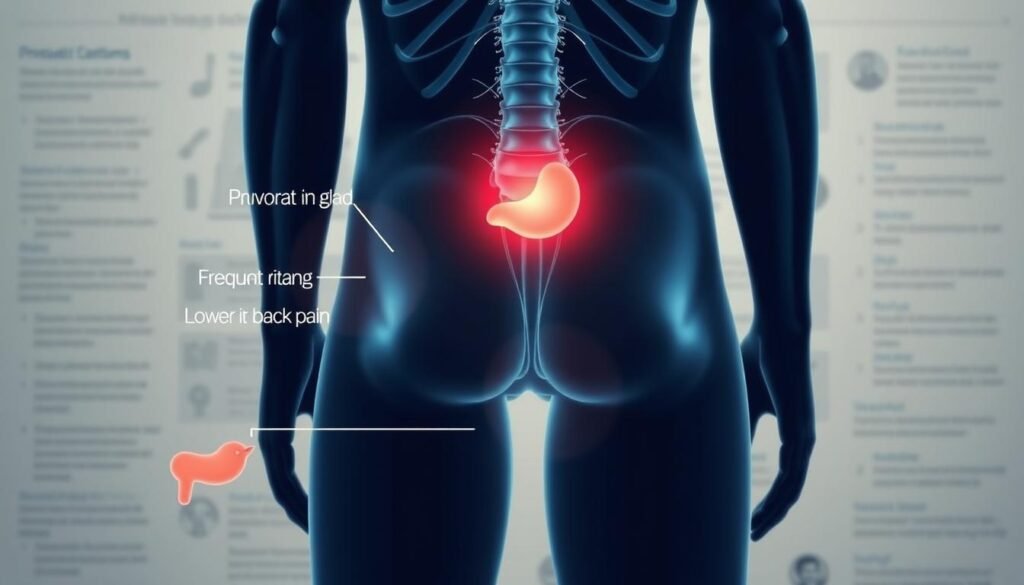
Understanding the Importance of Screening
Screening for prostate cancer is key to finding it early. This can make treatment more effective. The PSA test and digital rectal exam are very important. They help catch problems early on. Knowing about these tests helps people take control of their health.
Why Screening Matters
Screening helps find prostate cancer early. This means treatment can start sooner and work better. Prostate cancer is a top cancer worldwide. It affects many people in different places. In the US, it’s especially common among men. Knowing about and getting screening can save lives.
PSA Test Overview
The PSA test checks for a specific marker in the blood. This marker can show if there may be cancer. High PSA levels don’t always mean cancer, but it’s a warning sign. Men over 50, those with prostate cancer in the family, and Black men should get tested. The results help doctors know what to do next.
Digital Rectal Exam (DRE)
A doctor checks the prostate with a digital rectal exam. It can feel odd but gives important health info. Many doctors say to do this test and the PSA test together. This way, they get a full picture of your prostate health.
How to Get Screened for Prostate Cancer
Learning how to get screened for prostate cancer is key for catching it early. Men should think about screening starting in their 40s, especially if they’re at high risk. For most, screenings should start at 45. Talk about your health, family history, and race with a doctor to figure out when to begin.
Starting Your Screening Journey
Men need to talk with their doctors about how to screen for prostate cancer. The main tests are:
- Prostate-Specific Antigen (PSA) Test: This test checks the PSA level in your blood, which can signal prostate cancer.
- Digital Rectal Exam (DRE): A doctor checks the prostate physically for anything abnormal.
A doctor will look at your age, family history, and race to decide if and when you need screening. Personalized advice is crucial for effectively detecting prostate cancer.
Frequency of Screenings
How often you need screening depends on your health and risk factors. Here’s a basic guideline:
| Age Group | Screening Recommendation |
|---|---|
| Under 40 | No routine screening unless you’re at high risk. |
| 40-45 | Start talking about it; screening may be needed if you’re at risk. |
| 45-50 | Start regular screenings if you’re at average risk; check the results with your doctor often. |
| 50 and older | Yearly screenings are advised for those at average risk. |
Men with high PSA levels or worrying signs might need screenings more often. It’s important to make a plan with your doctor. Early discussions and screenings can find problems early, leading to better chances of successful treatment.
Interpreting PSA Test Results
The PSA test looks for a specific antigen in the blood, a crucial step for early prostate issue detection. Levels of PSA are measured in ng/mL. It’s important to understand what these numbers mean for your health.
Understanding Normal vs. Elevated PSA Levels
Normal PSA levels are typically between 0 and 4 ng/mL. However, what’s normal can vary from one person to another. Factors like age and the health of the prostate can influence PSA levels. As men get older, their PSA levels might naturally rise.
PSA levels under 1 ng/mL are usually not a concern. Levels from 1 to 3 ng/mL are also considered safe. But when PSA levels go over 3 ng/mL, it’s a sign that further checks are needed. Levels of 4 to 10 ng/mL are borderline. Anything above 10.0 ng/mL requires immediate follow-up because it could be a sign of prostate cancer.
What High PSA Levels May Indicate
High PSA levels don’t always mean prostate cancer. They can also be due to benign conditions like prostatitis or an enlarged prostate. Still, high levels need careful evaluation to find the cause. Tracking changes in PSA levels over time helps doctors distinguish between short-term changes and consistent rises.
For men between 55 to 69, screening for PSA levels is especially important. It’s also advised for those with a family history of prostate issues or who are Black/African American to start screening early. Understanding your PSA levels can help you and your doctor figure out the next steps.
Signs of Advanced Prostate Cancer
Advanced prostate cancer means the cancer has spread from the prostate. It’s important to know the signs for early treatment. Spotting these signs early can help manage the disease better and improve life quality.
Symptoms to Watch For
There are many different symptoms of advanced prostate cancer. Some common ones include:
- Persistent back, hip, or pelvic pain
- Swelling in the legs
- Unexplained weight loss
- Fatigue and general weakness
- Urinary issues such as pain while urinating or blood in urine
Knowing these symptoms helps people get medical advice quickly. If you have these symptoms, talk to a doctor. They can explain more about metastatic prostate cancer and the treatments available.
Understanding Metastatic Prostate Cancer
Metastatic prostate cancer can move to other parts of the body through blood or lymph. It often affects lymph nodes, bones, and liver. Symptoms can show up in the areas where cancer has spread. A team of cancer specialists may work together to treat it. Keeping up with regular check-ups and PSA tests helps track the cancer.
To help with symptoms, treatments might include hormone therapy, chemotherapy, and pain relief. These treatments help patients manage their condition and make good health decisions.
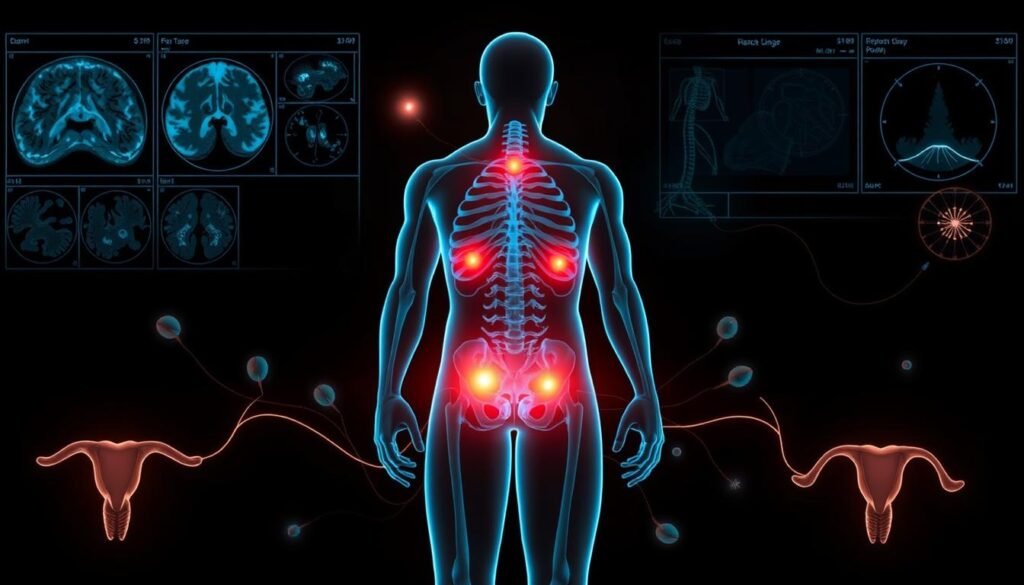
| Symptom | Description |
|---|---|
| Bone Pain | Discomfort often felt in the back, hips, or pelvis, indicating possible spread to bones. |
| Weight Loss | Unexplained reduction in body weight that can signal advanced stages. |
| Fatigue | Extreme tiredness that does not improve with rest. |
| Urinary Issues | Problems such as pain during urination or blood in urine and semen. |
Spotting advanced prostate cancer signs early improves treatment chances. If you see these symptoms, seeing a healthcare provider is key. They can do a full check and guide on the best care plan.
Next Steps After Screening
After a prostate cancer screening, knowing what comes next is crucial. High PSA levels or abnormalities found in a digital rectal exam may indicate the need for more tests. These further tests for prostate cancer could include biopsies and imaging studies. They are essential for confirming a prostate cancer diagnosis.
Follow-Up Tests and Biopsies
Biopsies involve taking tissue samples from the prostate. This process helps identify if cancer cells exist and their type, which affects treatment choices. A team approach often helps in evaluating treatments and outcomes. This method enables patients to get personalized care. It considers factors like genetics, cancer stage, and personal situations. Below you’ll find a table of common follow-up tests:
| Test | Description | Purpose |
|---|---|---|
| Biopsy | A procedure to remove tissue samples from the prostate. | Confirms the presence of cancer and assesses its grading. |
| CT Scan | X-ray imaging to view internal organs in detail. | Assesses potential metastasis beyond the prostate. |
| Bone Scan | A nuclear imaging technique to check for cancer spread in bones. | Detects metastasis if bone involvement is suspected. |
| MRI | Magnetic resonance imaging for detailed internal images. | Provides insight into cancer spread and local involvement. |
Managing Anxiety Post-Diagnosis
Getting a prostate cancer diagnosis can make you feel anxious and uncertain. It’s important to talk openly with your healthcare team about your feelings and worries. Options like counseling, joining support groups, and learning about the disease can help reduce stress. For those with low-risk prostate cancer, active surveillance might be offered. It involves regular checks without rushing into treatment.
Prostate Cancer Diagnosis Process
The process to diagnose prostate cancer begins with a thorough medical check-up. This prostate cancer diagnosis process includes looking into your medical past. Doctors want to know about any risk factors and symptoms.
If initial tests suggest there might be cancer, doctors often do prostate biopsies. Though biopsies can risk bleeding and infection, they’re vital. They tell doctors if cancer cells are present.
After the biopsy, doctors figure out the cancer’s stage and grade. This helps them decide on the best treatment approach. They might use MRI and CT scans too. These scans check if the cancer has spread outside the prostate.
It’s important for patients to talk about their risks and symptoms with their doctors. Being informed helps patients deal with this complex issue better. For more details on prostate cancer, you can check understanding prostate cancer.
Conclusion
Prostate cancer is a major health concern for men. It makes knowing about the disease critical for early detection and treatment. It can start without symptoms and later cause serious issues like erectile dysfunction and weight loss.
Having regular checks, like PSA tests and Digital Rectal Examinations (DRE), helps find problems early. This can make them easier to handle.
Talking often with doctors about risks, such as family history and lifestyle, is key to good prostate health. Adding healthy habits, like eating well and exercising, can lower cancer risk. It also boosts overall health.
Men are urged to focus on their health and get screened. This helps them stay informed and active in preventing prostate cancer.
Knowing what to do and getting help early can greatly increase the chance of beating this cancer. It shows that being informed and taking action are major steps in dealing with a common male cancer.