Have you heard? Proton beam radiation therapy for prostate cancer helps patients avoid bad side effects better than traditional treatments. Studies show that only 12% of those who get proton therapy have severe side effects within 90 days. That’s less than the 28% in the traditional treatment group. This new method focuses on hitting the tumor precisely. It keeps the healthy tissues around it safe.
Proton beam radiation therapy stands out in cancer care. It uses precise beams to lessen damage to nearby organs. This means patients can have a better life during and after treatment. More hospitals in the US are now offering this advanced therapy. It shows great promise for treating different stages of prostate cancer.
We’re going to look at how proton beam radiation therapy and traditional treatments for prostate cancer differ. We’ll examine how they work, their effects, costs, and the latest research.
Key Takeaways
- Proton beam radiation therapy is less likely to cause severe side effects compared to traditional radiation.
- This therapy offers precise tumor targeting, preserving surrounding healthy tissues.
- It may be applicable for various stages of prostate cancer.
- Not all insurance plans cover the costs associated with proton therapy.
- Clinical trials are actively assessing the efficacy of proton therapy against traditional methods.
Understanding Proton Beam Therapy
Proton therapy is a cutting-edge cancer treatment. It uses targeted radiation from positively charged protons. Unlike standard X-ray radiation, it allows for greater precision. This means energy goes exactly where it’s needed inside the body.
Protons are aimed directly at the tumor. They stop at a specific depth in the cancerous tissue. This level of control makes precision cancer treatment a reality. It tailors therapy to the tumor’s unique shape and size.
Since 2010, more doctors have been using proton therapy. Its use jumped from 0.4% to 2.2% by 2018. Prostate cancer patients have seen big benefits. The directed radiation spares healthy tissue around the tumor. So, patients face fewer side effects than with traditional treatments.
Experts say proton therapy is effective in treating tumors. It also keeps the quality of life high during and after treatment. A recent study shows it reduces risks to healthy organs. This cuts the chance of secondary cancers. It delivers a strong dose to the tumor while protecting nearby healthy tissue.
To sum up, proton therapy is a great option for prostate cancer. It offers targeted radiation advantages. This therapy gives patients and doctors hope for better results and smoother recovery.
What is Prostate Cancer?
Prostate cancer is a major health issue mainly affecting men over 50. It starts in the prostate gland, important for reproduction. Age, genetics, and lifestyle play roles in the risk level for developing prostate cancer.
Some prostate cancers grow slowly and might not need quick treatment. Yet, aggressive types should be treated right away. Catching it early is key, with PSA tests and biopsies helping find cancer cells.
There are several cancer treatment paths for those diagnosed. Options include surgery, hormone therapy, and various radiation techniques. Specifically, proton beam therapy is gaining attention. It targets cancer with protons, reducing harm to nearby healthy tissues.
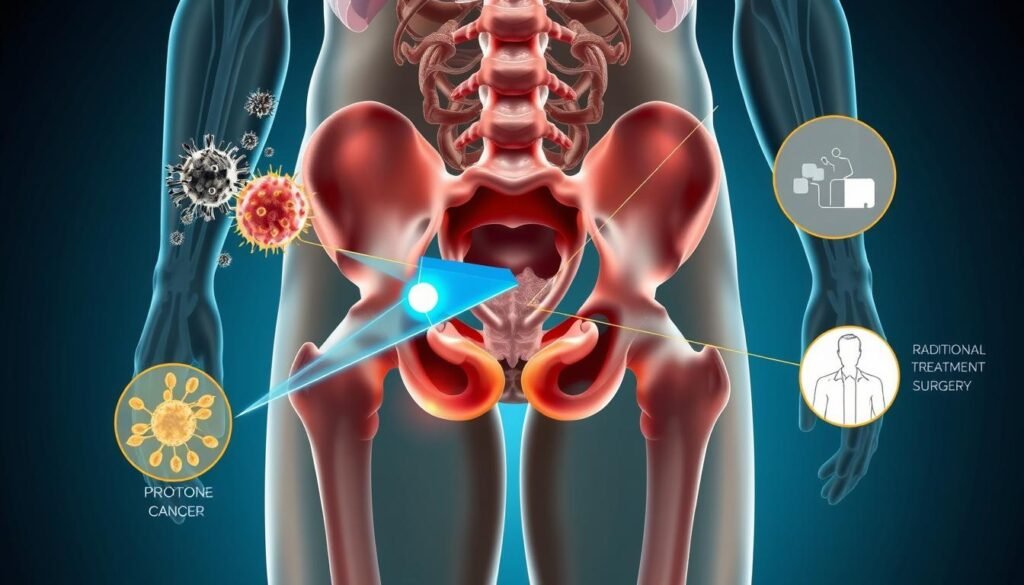
| Prostate Cancer Characteristics | Treatment Options |
|---|---|
| Slow-growing vs. Aggressive | Surgical Removal |
| Risk Factors Include Age and Genetics | Hormone Therapy |
| Detection via PSA Testing | Radiation Therapy |
| Requires Ongoing Monitoring | Proton Beam Therapy |
| Potential for Recurrence | Brachytherapy |
Traditional Radiation Therapy Explained
Traditional radiation therapy is key in fighting cancers like prostate cancer. It uses high-energy X-ray beams to target and kill cancer cells. By harming the DNA of tumor cells, the therapy promotes their death, which can help manage the disease effectively.
However, this method can harm healthy tissues around the cancer. Photon radiation doesn’t only hit cancer cells, causing damage to nearby organs. This can lead to side effects such as fatigue and skin irritation, which affect the patient’s life quality.
Over the years, radiation oncology has seen significant improvements. Now, treatment is more precise. Combining external beam radiation therapy (EBRT) with brachytherapy, where radioactive seeds are placed inside the prostate, has shown better outcomes. But, this approach may increase the risk of certain side effects.
In traditional radiation treatment, the dosage is carefully planned. This planning allows for treatment over several sessions, creating personalized plans for each patient. Newer methods, like intensity-modulated radiation therapy (IMRT) and volumetric modulated arc therapy (VMAT), are being used. They focus on hitting the tumor more accurately while protecting healthy tissues.
Choosing traditional radiation therapy depends on the tumor and the patient’s overall health. Many with prostate cancer choose it, often as a nonsurgical option. Even though it’s been around for a while, new advancements continue to improve how it’s used in radiation oncology.
Proton Beam Radiation Therapy for Prostate Cancer
Proton Beam Radiation Therapy is a cutting-edge treatment for prostate cancer. It uses protons’ unique traits to target tumors precisely. This improves treatment results and spares healthy tissues around the tumor.
Mechanism of Action
Proton therapy delivers radiation straight to cancer cells, controlling tumors well. Proton radiation can stop right at the tumor, protecting nearby organs like the bladder and rectum. This makes proton therapy effective and non-invasive.
Benefits of Proton Therapy
Proton Beam Radiation Therapy brings many benefits, including:
- Minimal side effects: It causes less toxicity than other treatments.
- Enhanced quality of life: Patients often feel better overall after treatment.
- Fewer hospitalizations: Its targeted approach means less need for extra care.
- Improved recovery: Patients usually can keep up their daily routines around therapy sessions.
Centers like the University of Florida Health Proton Therapy Institute have seen many successful treatments. Their work and ongoing research make proton therapy a strong choice for those looking for less harmful treatments.
| Aspect | Proton Therapy | Traditional Radiation Therapy |
|---|---|---|
| Precision | High precision targeting, reduces damage to surrounding tissues | Less precise, higher risk of collateral damage |
| Side Effects | Minimal side effects, less acute and chronic toxicity | Higher likelihood of side effects including bowel and bladder irritation |
| Patient Recovery | Quick return to normal activities | Longer recovery periods |
| Effectiveness | Excellent control of tumors | Effective, but varies based on individual cases |
Key Differences Between Proton Therapy and Traditional Radiation
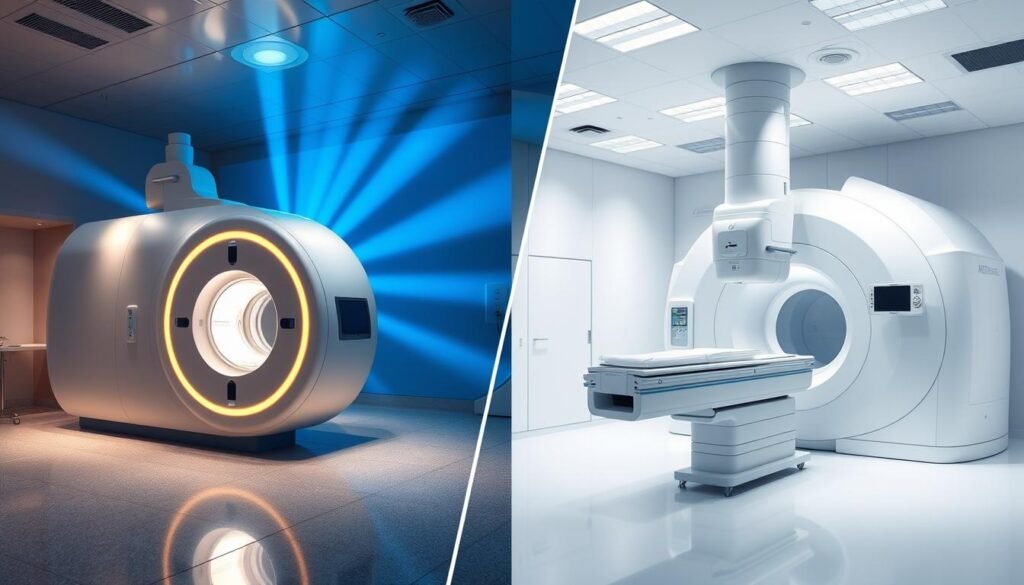
When we look at proton therapy versus traditional radiation therapy, we find important info. Those needing treatment will notice major differences in how each therapy works. These differences greatly influence treatment success and how patients feel afterward.
Targeting Precision
Proton therapy brings better precision in targeting tumors. It sends radiation right to the cancer, keeping healthy tissue safe. This approach means 60 percent less radiation hits the good areas than with traditional methods. Doctors can therefore attack cancer cells while protecting important body parts. This is very helpful for cancer near vital organs, lowering the risk of unwanted damage.
Impact on Nearby Healthy Tissues
The effect on nearby healthy tissues also differs a lot. Traditional radiation might harm nearby organs more, increasing side effect risks. This includes a higher chance of getting more cancers later. But, proton therapy could be safer in this respect. Research shows that it might send lower radiation doses to non-cancerous organs. This could mean fewer chances of developing new cancers later on.
Effectiveness of Proton Beam Therapy
Proton beam therapy for prostate cancer is getting a lot of attention. It has big benefits over old ways of treating cancer. Studies show it’s as good as traditional radiation for local prostate cancer, with similar survival rates.
Survival Rates and Success Factors
Patients treated with proton therapy often do well. They have about a 93.4% survival rate after three years, similar to other treatments. This shows proton therapy keeps life quality high. Success depends on cancer stage, the patient’s health, and other treatments used. Regular PSA tests are crucial for better outcomes.
Comparative Results
Proton therapy stands out among cancer treatments. It’s less harmful to nearby healthy tissues, lowering unwanted side effects. It avoids lowering testosterone levels, an important factor for patients. This precision and safety bring new hope to those diagnosed with cancer.
| Parameter | Proton Therapy | IMRT (Intensity-Modulated Radiation Therapy) |
|---|---|---|
| Median Age of Patients | 68 years | 68 years |
| Progression-Free Survival Rate (5 years) | 93.4% | 93.7% |
| Risk of Secondary Cancer Development | 26-39% lower | N/A |
| Impact on Testosterone Levels | No impact | No impact |
| Patient-Reported Quality of Life | Small, non-meaningful declines | Small, non-meaningful declines |
Side Effects of Proton Beam Radiation Therapy
Knowing the side effects of proton beam therapy is key for patients thinking about this option for prostate cancer. Proton therapy is precise and aims to protect healthy tissue, but some side effects may still happen. We’ll look at the usual side effects and long-term health issues that might come up.
Common Side Effects
Even though proton therapy is often gentler than traditional radiation, side effects can occur. Common ones include:
- Fatigue
- Urinary urgency
- Mild skin irritation in the treated area
These side effects are mostly short-lived and can be managed. Proton therapy’s precise targeting often means fewer side effects for patients.
Long-term Effects
It’s crucial to consider the possible long-term health effects of proton therapy. Compared to conventional radiation, issues are less common but can include:
- Erectile dysfunction
- Rectal bleeding
These more persistent effects may develop over time, requiring continuous observation. Treatment advancements are making the proton therapy experience better over time and after completion.
| Side Effects | Proton Therapy | Traditional Radiation |
|---|---|---|
| Fatigue | Common | Common |
| Urinary Issues | Less frequent | More frequent |
| Skin Irritation | Mild and temporary | Severe and longer-lasting |
| Erectile Dysfunction | Gradual development | More prevalent |
| Rectal Bleeding | Less frequent | More common |
Ongoing studies and keeping an eye on patients will help us better understand proton therapy’s long-term effects. This promises a fuller view of its pros and cons.
Cost Considerations for Patients
When looking at prostate cancer treatments, it’s key to know the costs involved. Proton therapy costs more than traditional radiation. This is due to its advanced technology and special facilities.
Insurance Coverage and Accessibility
Not every insurance plan covers proton therapy. This affects how easily patients can get this treatment. Many centers offer help to manage the financial side of things. They work with insurance to find any financial aid available. This is crucial for those worried about the costs. For more info, click here.
Long-term Financial Impacts
It’s important to think about the long-term costs of proton therapy. Even though it’s expensive upfront—sometimes around $115,501—it may save money later. This is because it often leads to fewer side effects like less urinary issues and erectile dysfunction. This can lower the need for extra treatments later on.
Current Research and Clinical Trials
Research into proton therapy is rapidly expanding. It’s focusing on how well it works in treating various cancers, especially prostate cancer. Current studies aim to show solid proof for using proton therapy as a main treatment. A lot of patients are joining trials. This is key for seeing how proton therapy does over time compared to usual methods.
Ongoing Studies Comparing Proton and Traditional Therapies
Clinical trials are now happening to see how proton therapy stacks up against standard radiation. At a top Proton Center, over 1,200 patients have joined in studies. 85% chose to be part of trials or signed up for data collection. Right now, there are about 14 active studies for adults and special ones for kids too.
| Trial Name | Focus | ClinicalTrials.gov Identifier |
|---|---|---|
| Phase III Study for Non-small Cell Lung Cancer | Effectiveness of proton therapy | NCT05624996 |
| Phase III Trial for Primary Mediastinal B-cell Lymphoma | Nivolumab vs. Chemo-immunotherapy | NCT04759586 |
| Phase II Trial for Pancreatic Adenocarcinoma | Escalated dose proton radiotherapy | NCT02598349 |
| Pediatric Proton Consortium Registry | Collaborative research on pediatric proton therapy | NCT01696721 |
These trials explore treatment for cancers like brain, breast, and anal squamous cell cancer. The goal is to see if proton therapy is safe and works well. Studies focus on lessening side effects andkeeping brain function intact. The focus on life quality shows how broad these trials are. To learn more, check the clinical trials page.
Future Directions in Cancer Treatment
Advances in proton therapy could greatly change cancer treatment. Next steps might look into mixing proton therapy with chemotherapy. This could maximize benefits while lowering risks. Trials like NRG-BN001 and NCT01893307 are exploring the best ways to improve survival and cut down on side effects. As results come in, the role of proton therapy in cancer care could get bigger.
Conclusion
Proton Beam Radiation Therapy is a strong choice for treating prostate cancer. It’s very precise and has fewer side effects. Studies show that it works well, with many patients being cancer-free after five years. For low-risk patients, nearly all were cancer-free with proton therapy.
This treatment is easier on the body. Men had 50% fewer bowel problems than with traditional treatments. According to a study, most patients saw their bowel and urinary health get better or go back to normal within two years.
Looking ahead, proton therapy might change how we treat prostate cancer. Researchers are still studying its pros and cons. They want to know how it stacks up against other treatments. For more info, check this detailed report here.