Prostate cancer is a major health issue for men in the United States. Nearly 1 in 8 men will get diagnosed in their lifetime. Radiopharmaceuticals are becoming key in fighting this disease. They use radioactive materials aimed at cancer cells. This method protects healthy cells and improves how well treatments work. It’s especially helpful for men with advanced prostate cancer who need more than standard treatments.
New treatments are changing prostate cancer care. They are designed for each person’s specific needs. For example, the FDA-approved Lu177-PSMA-617 (Pluvicto) gives new hope to those with advanced cancer. Research is also looking into combining these drugs with immunotherapy. This could make treatments even more effective.
Attacking cancer at the cellular level has huge benefits. It helps to reduce side effects and raise survival chances. Knowing how these treatments work is critical. It helps patients and their families make informed choices about their care.
Key Takeaways
- Prostate cancer is prevalent, affecting 1 in 8 men in the U.S.
- Radiopharmaceuticals offer targeted therapy, enhancing treatment precision.
- Lu177-PSMA-617 is FDA approved for metastatic prostate cancer with promising results.
- Compared to standard treatments, patients using Lu177-PSMA-617 enjoyed longer progression-free survival.
- Integrating immunotherapy with radiopharmaceuticals may improve cancer visibility to the immune system.
Introduction to Prostate Cancer Treatment
The way we treat prostate cancer depends on how far the disease has advanced. Doctors often use a mix of therapies such as surgery, chemotherapy, and radiation therapy. Tailoring treatment to fit each patient’s needs is key to success.
In 2022, the American Cancer Society reported about 268,490 new cases of prostate cancer in the U.S. This shows the need for good treatments. Radiation can work well but might harm healthy tissues, causing issues like hair loss and stomach problems. This has led doctors to look for new methods.
Radiopharmaceuticals are a new hope in treating prostate cancer. They aim to keep healthy cells safe. Drugs like lutetium Lu 177 vipivotide tetraxetan (177Lu-PSMA-617) have done well in controlling advanced prostate cancer. They target a specific part of cancer cells. Find out more from this resource.
Statistics show that 11% of American men might get prostate cancer. With numbers this high, using many ways to fight it is important. Combining new and old treatments could lead to better results.
There are many choices for prostate cancer treatment, aiming for better management and survival. As treatments keep getting better, there’s more hope for patients facing this tough diagnosis.
The Role of Radiopharmaceuticals in Cancer Therapy
Radiopharmaceuticals are a big step forward in treating cancer, like prostate cancer. They send radiation right to the cancer cells. This means they target the bad areas without hurting the good ones. This method is way better than the old radiation treatments.
Prostate cancer is a major issue for men in the United States. Around 268,490 men might be diagnosed in 2022. The treatments now are better because they focus on just the cancer cells. This helps avoid harming healthy cells.
One kind of treatment, Lutetium-177 PSMA-617, focuses on the tough prostate cancers. The U.S. FDA has given it the green light. It’s for patients who have tried other treatments but still show signs of cancer.
There are other drugs too, like Strontium-89 chloride and Radium-223 dichloride. They help with bone pain from prostate cancer. Given through shots, they can lessen pain and help patients live longer.
Thanks to these treatments, patients have simpler care plans. But they might feel tired or have a dry mouth. Doctors need to watch them closely. Thankfully, Medicare and most insurance will help pay for these options.
Radiopharmaceuticals are changing the game in cancer care. They target exactly what needs to be fixed. This improves how well treatments work and solves old problems.
Understanding Prostate-Specific Membrane Antigen (PSMA)
PSMA stands for prostate-specific membrane antigen. It’s a crucial protein in prostate cancer’s progress. This protein is found a lot in various prostate cancers, especially the ones that spread.
Identifying PSMA as a target has led to new treatments. These treatments can find cancer cells better. For example, a drug called lutetium Lu 177 vipivotide tetraxetan (Pluvicto) attaches to PSMA on cancer cells. This improves how well treatments work.
High PSMA levels in aggressive tumors help in therapy. They also help in molecular imaging. This gives deeper insights into how cancer grows and responds to treatments.
PSMA PET imaging finds cancer better than old methods. This helps change patient treatment plans. For example, 18F-PSMA PET/CT is great at spotting metastases in bones and soft tissues.
A review showed PET imaging is useful for prostate cancer coming back. Clinical trials, like the Phase 1 evaluation of 68Ga-PSMA-11 PET/CT, show promise. These trials were done in Japan with patients who had primary or recurrent prostate cancer.
With new treatments, side effects like nausea and vomiting might happen. Staying both mentally and physically healthy is important. Doctors might suggest seeing a dietitian specialized in cancer. A healthy diet supports recovery and improves overall health.
PSMA is very important in fighting prostate cancer. For more info on PSMA and its role, check out this relevant source.
| Study/Article | Findings |
|---|---|
| PSMA PET Imaging | Increased detection rates versus conventional imaging |
| 18F-PSMA PET/CT | Better detection of bone and soft tissue metastases |
| Meta-analysis on PET-based imaging | Shows utility in addressing biochemical recurrence |
| 68Ga-PSMA-11 PET/CT clinical study | Evaluates efficacy in recurrent prostate cancer patients |
| PSMA-RADS vs. E-PSMA | Exploring agreement in lesion classification |
How Radiopharmaceuticals Target Cancer Cells
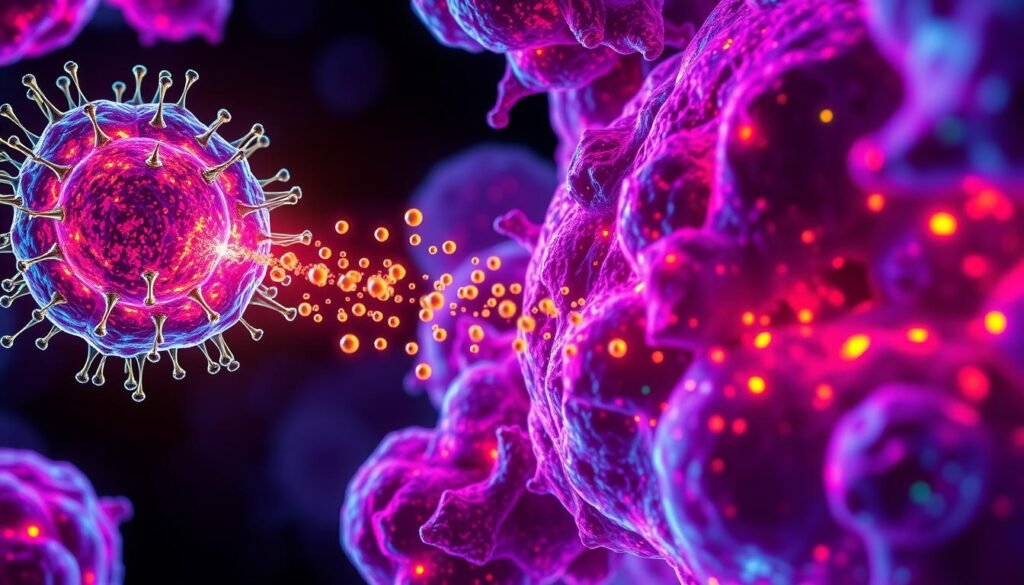
Radiopharmaceuticals are a big deal in cancer treatment. They aim right at cancer cells with precision. These drugs pair a radionuclide with a molecule that finds and attaches to specific cancer cells. By focusing on tumor sites, they reduce harm to healthy tissues around them.
These radionuclides do more than just kill cancer cells. After binding to the target, they emit radiation that messes up the cancer cells’ DNA. This stops the cells from multiplying and leads to their death. They can even hit tiny groups of spreading cancer cells, helping patients with advanced cancer.
Many radiopharmaceuticals are being tested, with some already approved by the FDA. For example, Lu177-PSMA-617 is making strides in advanced prostate cancer treatment. It extends patients’ lives by about four months, showing how potent these treatments can be.
The search for better cancer treatments is ongoing. Radiopharmaceuticals are in the spotlight for their effectiveness and fewer side effects compared to chemotherapy. This innovative method could change how prostate cancer and other cancers are treated.
| Radiopharmaceutical | Indication | Mechanism of Action | FDA Approval Year | Survival Benefit |
|---|---|---|---|---|
| Lu177-PSMA-617 | Advanced Prostate Cancer | Cancer cell targeting via PSMA | 2020 | Approximately 4 months |
| Lutetium Lu 177-dotatate | Neuroendocrine Tumors | Targets specific receptors on tumor cells | 2018 | 17% tumor shrinkage |
This info shows how cancer treatment is evolving, especially with radiopharmaceuticals. They represent a key change in treating cancer, focusing on patient safety and better outcomes.
Molecular Imaging Techniques: The Role of PET Scans
Molecular imaging has changed how we diagnose and manage prostate cancer. PET scans are now key in this change. These scans let doctors see metabolic changes and find cancer by its biology. PSMA-targeted imaging shines by focusing on a specific marker found in most prostate cancer cells.
A big review found 39 studies showing how well PET scans work for prostate cancer. The review looked at different markers, including choline and PSMA. For choline-marked PET/CT scans, sensitivity was between 0.57 and 0.93, and specificity was really high, from 0.83 to 0.95. PSMA imaging did even better, with sensitivities up to 0.97 and specificities reaching 1.00.
PET scans also Excel in detecting cancer rates and understanding diagnostic power. PSMA PET/CT scans’ positive likelihood ratios ranged impressively from 10.6 to 30.3. These scans are great at spotting where cancer has spread by looking for PSMA overexpression. Knowing this helps doctors create better treatment plans and track how patients are doing.
There’s a growing interest in using these advanced scans in treating cancer. More studies are being published on PET/CT and SPECT/CT imaging. This shows a strong move towards more precise cancer treatment. Integrating imaging with treatment is a big step forward in beating prostate cancer.
Radiopharmaceuticals in Prostate Cancer Treatment
Radiopharmaceuticals have changed how doctors treat prostate cancer. They deliver treatment directly to cancer cells while sparing healthy ones. The FDA has approved key agents, offering more effective options.
Overview of Key Agents
Radiopharmaceuticals like Lu177-PSMA-617, or Pluvicto, are revolutionizing prostate cancer care. They are particularly helpful for metastatic castrate-resistant prostate cancer. The American Cancer Society reports about 268,490 new cases in the U.S. in 2022, underscoring the need for better treatments.
Another major advance is Gallium Ga 68 gozetotide. The FDA has approved it for PET scans to find PSMA-positive tumors. This is key for pinpointing cancer, especially after it returns.
FDA Approvals and Clinical Trials
On March 23, 2022, Lu177-PSMA-617 was approved by the FDA. The VISION study showed it significantly lowers PSA levels in 70-75% of patients. Those treated often lived longer than those who received standard care.
The FDA’s nod to Gallium Ga 68 gozetotide highlights diagnostic radiopharmaceuticals’ growing role. These agents showcase a move towards more specific treatment methods. Their success in trials marks a big leap in fighting cancer.
| Radiopharmaceutical | FDA Approval Date | Indication | Key Findings from Clinical Trials |
|---|---|---|---|
| Lu177-PSMA-617 (Pluvicto) | March 23, 2022 | Metastatic castrate-resistant prostate cancer | 70-75% PSA decline, improved overall survival |
| Gallium Ga 68 gozetotide | 2021 | Diagnostic imaging of PSMA-positive lesions | Enhanced localization of tumors |

Benefits of Targeted Therapy in Prostate Cancer
Targeted therapy offers big benefits for those with prostate cancer. It makes treatment more precise, which is a big change. This method focuses on cancer cells and spares the healthy ones. This may lead to fewer side effects than what you see with chemotherapy.
The core benefits of targeted therapy include treatments designed for each patient’s cancer type. For example, Lutetium-177 PSMA-617 shows great promise for certain hard-to-treat cancers. This approach is at the heart of precision oncology. It lets doctors create more effective plans for their patients.
Clinical trials have shown that drugs like radium-223 help with pain and can even help patients live longer. Also, using different treatments together can boost survival chances for those with advanced cancer.
The treatments, often given through several injections over weeks, show careful planning. With prostate cancer being so common in U.S. men, targeted therapy is a hopeful strategy. It aims to better the care and results for patients.
Side Effects and Considerations
Radiopharmaceuticals offer hope in fighting prostate cancer. However, knowing the possible side effects is vital. Some effects are mild, while others are more severe. All of them require careful monitoring for patient safety.
- Fatigue: This is common and varies in severity. Some feel slightly tired, while others may need to change their daily routine.
- Dry mouth: Can cause discomfort. It might affect how you swallow or talk.
- Blood cell alterations: These changes could lead to more bleeding or infections. It shows how important regular check-ups are.
Even though serious side effects are rare, doctors must stay alert. They ensure quick action on any new or worsening issues.
Other treatments, like external radiation, have their own risks. Around half of the men see urine leakage after six years. They might also have lasting skin and urinary issues, like more frequent urination or pain.
The benefits of using radiopharmaceuticals in treating prostate cancer are clear. Yet, understanding and managing the side effects is crucial. This ensures patient safety and better results from the treatment.
Future Directions and Innovations in Radiopharmaceuticals in Prostate Cancer
The future of radiopharmaceuticals in treating prostate cancer is full of promise. Research is revealing new agents and improving current therapies. A major breakthrough includes merging radiopharmaceuticals with immunotherapy for better outcomes.
New therapies aim to better use radiolabeled drugs targeting both bone metastases and cells with PSMA. PSMA is key as prostate cancer cells often have it. Agents like [68Ga]Ga-PSMA-617 and [18F]PSMA-1007 are vital for imaging and treatment. These help doctors decide on the best treatment by showing where the drugs go in the body.
Improvements in PSMA imaging techniques are a big leap forward. They could make treatments more precise. Radiolabeled PSMA ligands show the exciting future of radiopharmaceuticals. To make these treatments more available, ongoing research and trials are crucial. They help improve life for those with late-stage prostate cancer.
| Radiopharmaceutical Agent | Type | Use | Notes |
|---|---|---|---|
| [68Ga]Ga-PSMA-617 | Beta-emitting | Imaging and therapy | Low renal accumulation |
| [18F]PSMA-1007 | Beta-emitting | Imaging | Preferred in certain cases |
| [99mTc]Tc-PSMA-I&S | Gamma-emitting | Scintigraphy imaging | Supports non-invasive assessment |
| Radium-223 | Alpha-emitting | Therapy | Used in advanced mCRPC |
| Lutetium-177 | Beta-emitting | Therapy | Targets and destroys cancer cells |
Artificial intelligence and precision medicine are changing how we think about treatment. Ongoing research and partnerships will hopefully lead to longer lives and better care. This suggests an exciting future with many chances for progress.
Conclusion
Radiopharmaceuticals mark a major step forward in fighting prostate cancer, especially for those with advanced stages. These treatments, like radium-223 (Xofigo) and PSMA-directed therapy (Pluvicto), play a key role. They boost survival rates and lessen side effects, thanks to combining with imaging tech.
Research highlights the need for care plans made just for each person. Promising studies suggest these treatments could be used earlier, improving patient care. New drugs, such as actinium-225, are being studied and could change how we fight prostate cancer.
The shift in prostate cancer care stresses the need for better access to radiopharmaceuticals. Making these treatments available to more people can improve lives. It supports a move towards care that focuses on the best results and the health of patients in the long run.