Did you know that 1 in 7 men will get prostate cancer? It’s the second most common type among men globally. This fact shows why it’s key to know about stage 1 prostate cancer symptoms. At this early stage, symptoms might be hard to notice, making early diagnosis tricky.
Knowing the early signs of prostate cancer can greatly affect treatment success. Being aware allows for quick action, possibly leading to better control over this disease. For men and their families, spotting these signs early is a big step in fighting prostate cancer.
Key Takeaways
- Prostate cancer is prevalent among men, affecting 1 in 7 during their lifetime.
- Stage 1 prostate cancer often has few to no symptoms, making awareness vital.
- Identifying early signs of prostate cancer can improve management and survival outcomes.
- Regular screenings, such as PSA tests, are essential in detecting prostate cancer early.
- Understanding risk factors like age and family history can aid in early detection.
Understanding Prostate Cancer
Prostate cancer happens in the prostate gland, which is important for male reproductive health. It starts when cells grow too fast, often influenced by male hormones like androgens. The risk goes up with age, especially after 50.
Finding it early is key to handle it well. Most cases, about 85%, are found through screenings before symptoms show up. Knowing about prostate cancer is crucial because it can grow quietly. Often, it’s not noticed until it has advanced.
Stage 1 prostate cancer is still just in the prostate. It grows slowly and usually doesn’t cause symptoms at first. But, as it gets worse, symptoms like trouble peeing, pain in the legs, and erectile issues can start.
Spotting signs of prostate cancer early is important for taking action. Look out for signs like needing to pee a lot, having a hard time starting to pee, and feeling pain when you do. These could also be from other conditions, not just cancer. Always talk to a doctor if you have these symptoms for a while.
| Symptom | Description |
|---|---|
| Frequent Urination | Increased need to urinate, especially at night. |
| Difficulty Starting Urination | Challenges initiating the urine stream. |
| Painful Urination | Discomfort or burning sensation during urination. |
| Lower Back Pain | Persistent pain or stiffness in the lower back. |
| Erectile Dysfunction | Challenges in achieving or maintaining an erection. |
What is Stage 1 Prostate Cancer?
Stage 1 prostate cancer is a form of cancer that stays inside the prostate gland. The tumor is small at this stage, making it hard to notice without symptoms. Detecting it early is vital for good treatment outcomes.
The outlook for Stage 1 prostate cancer patients is generally good. Treatments, which may include active surveillance or procedures tailored to the patient, often work well. Factors like a low PSA level—usually under 10—and a Gleason score no higher than 6 indicate the cancer grows slowly.
Knowing about Stage 1 prostate cancer is crucial for planning care and treatment. Patients should learn about their cancer stage. This knowledge helps them take an active part in choosing treatments. Tumor size, lymph node status, and Gleason score help form the treatment plan.
Stage 1 Prostate Cancer Symptoms
Finding out about stage 1 prostate cancer symptoms is key for quick detection and control. At this early stage, many men might not see clear signs. Still, some symptoms could appear that need attention. Knowing these can help with early action.
Common Signs to Look For
Some well-known symptoms include:
- Difficulty urinating
- A weak urinary stream
- Increased frequency of urination, especially at night
These symptoms of stage 1 prostate cancer might develop slowly. Men should watch out, especially if these symptoms interfere with everyday life. Even small changes might be a warning sign, leading to a doctor’s visit.
Subtle Changes That May Indicate Cancer
Besides the usual symptoms of a prostate tumor, some men may feel:
- Slight discomfort in the pelvic area
- Unexplained tiredness
- Changes in how their body works sexually
These early signs of prostate cancer might be overlooked as normal aging. But, being aware is vital for taking care of your health. Having regular doctor visits and talking openly with health professionals are important steps for keeping track of these changes.
Early Signs of Prostate Cancer
It’s very important to know the early signs of prostate cancer. Often, people think initial symptoms are not serious. However, recognizing these signs early can help start treatment sooner. This increases chances of managing the disease effectively.
Identifying Initial Symptoms
Here are some common early symptoms:
- Weak urine flow or difficulty starting and stopping urination
- Pain or burning sensation during urination or ejaculation
- Blood in urine or semen
- Frequent urination, especially at night
- Difficulty maintaining an erection
These symptoms might seem like they’re from other health issues. For instance, benign prostatic hyperplasia (BPH) has similar symptoms. But they need attention, particularly if you’re over 50.
Uncommon Early Indicators
Some early signs are less common:
- Unexplained weight loss
- Persistent fatigue that doesn’t get better
- Changes in sexual function or desire
These signs may not always point to prostate cancer. But they could mean the cancer is getting worse. Spotting these symptoms early can lead to faster medical help and care.

Localized Prostate Cancer Indicators
Localized prostate cancer can be hard to spot early on. This is because it often doesn’t show clear symptoms. Knowing the early signs of prostate cancer is important for getting help on time.
Common signs to watch for include:
- Difficulty starting or stopping urination
- Discomfort or pain in the lower back or hips
- Changes in sexual function, such as erectile dysfunction
- Presence of blood in urine or semen
- Unexplained weight loss or fatigue
Some symptoms might not always mean cancer, but it’s best not to ignore them. Always talk to a doctor if these symptoms last. They can figure out if it’s cancer or something else.
Some signs might lead doctors to do more tests, especially if the first tests don’t give clear answers. Recognizing these signs early can help save lives. It can also make living with the disease easier for those found to have cancer. For more on these signs, visit localized indicators.
| Localized Prostate Cancer Indicators | Description | Possible Causes |
|---|---|---|
| Urinary issues | Difficulty starting or stopping urination | Prostate obstruction or inflammation |
| Bone pain | Discomfort in the lower back or hips | Metastasis or benign conditions |
| Erectile dysfunction | Changes in sexual function | Hormonal imbalance or nerve impact |
| Fatigue | Excessive tiredness not related to activity | Body’s response to malignancy |
| Weight loss | Unexplained decrease in body mass | Chronic illness, including cancer |
Symptoms of Prostate Tumor
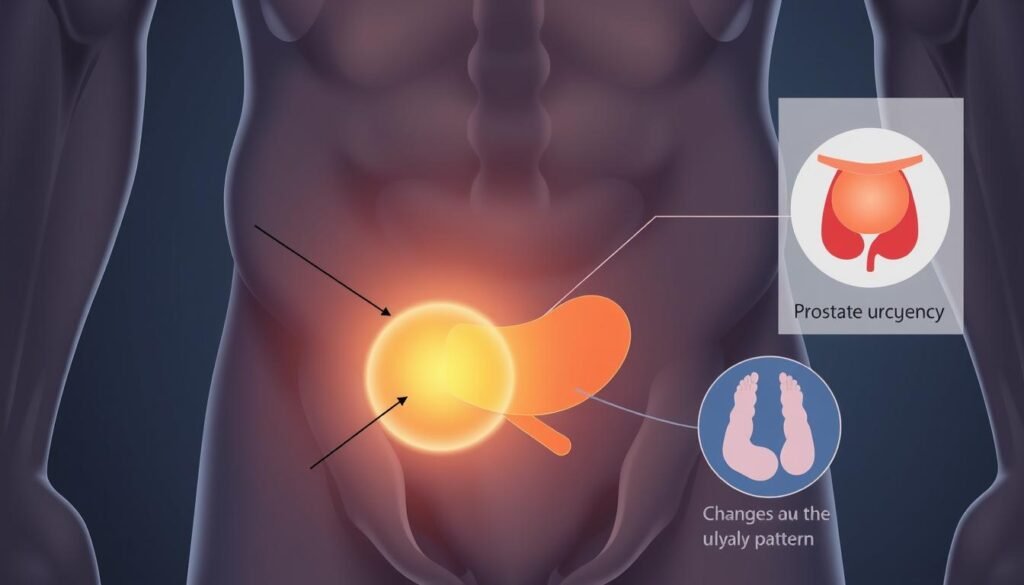
Prostate tumors can change how you pee and affect your health. It’s important to know the symptoms for early detection and treatment. If you catch prostate cancer early, spotting urinary symptoms can help spot the problem.
How Tumors Affect Urinary Function
When prostate tumors grow, they press on your pee tube. This can cause:
- Increased frequency of urination
- Urinary urgency
- Painful urination
Trouble starting to urinate could be a stage 1 prostate cancer symptom. This pressure makes it hard to pee comfortably and requires a doctor’s check. Keeping an eye on these signs is key for early help. You can learn more by clicking this link.
Connection Between Tumor Size and Symptoms
The bigger the tumor, the worse the pee problems. Bigger tumors block pee flow more, leading to:
| Tumor Size | Common Symptoms |
|---|---|
| Small | Mild urinary frequency, slight urgency |
| Moderate | Increased frequency, noticeable urgency, discomfort |
| Large | Severe urinary difficulties, frequent painful urination |
Knowing this link highlights why regular doctor visits are crucial. Watching for any pee changes can catch issues early, improving prostate health management.
Risk Factors for Early Detection
Understanding the risk factors for prostate cancer is crucial. Age and family history are big factors. Men over 50 have a higher risk, which highlights the need for regular screenings.
The Role of Age in Prostate Cancer Diagnosis
Age is a key risk factor, with most cases found in men over 65. This makes routine screenings very important. Often, symptoms don’t show until the cancer is advanced. The risk factors for prostate cancer get more common as men get older. This shows why early testing, like PSA tests, is essential.
Significance of Family History
Family history is also significant. Men with relatives who’ve had prostate cancer face double the risk. If you have a family history of it, talk to your doctor about getting screened by age 45. Keeping an eye on prostate cancer risk factors can lead to early detection and better treatment success.
Diagnosis of Early-Stage Prostate Cancer
Finding early-stage prostate cancer early is key for good treatment. PSA testing checks prostate-specific antigen levels in your blood. High PSA levels can mean prostate problems, leading to more checks.
PSA Testing and Digital Rectal Exam
PSA testing and digital rectal exams are both very important. In a DRE, a doctor checks the prostate by hand for any oddities. If tests show something’s wrong, more steps like biopsies are needed to make sure it’s early-stage prostate cancer.
The Importance of Regular Screenings
It’s very important for men over 50 to get regular check-ups. This also goes for those with risks like family history. Getting PSA tests often can find prostate cancer early. This improves chances of beating it. Your overall health and situation should inform screening talks with doctors.
Treatment Options for Stage 1 Prostate Cancer
The treatment for stage 1 prostate cancer depends on the patient and the tumor’s details. At this stage, the cancer hasn’t spread, giving several options for care. Doctors look at the patient’s risk group to choose the best treatment plan.
Understanding Active Surveillance
Active surveillance is a choice for those with very low or low risk. It means watching the cancer closely without treating it right away. Patients undergo regular check-ups, PSA tests, and biopsies to monitor the cancer.
If the cancer shows signs of growing, then more active treatments are considered. This strategy avoids unnecessary treatments and keeps the patient’s life quality high. It also ensures steps are taken if the cancer gets worse.
Surgical and Radiation Treatments
For those at a favorable intermediate risk, surgery or radiation are the main treatments. Removing the prostate, or radical prostatectomy, can often cure cancer at stage 1. Radiation methods like external beam therapy or brachytherapy focus on cancer cells and save healthy tissue.
Both methods have good cure rates. The choice between them depends on what the patient and doctor think is best. This depends on personal feelings and health issues.
| Treatment Type | Description | Risk Groups | Considerations |
|---|---|---|---|
| Active Surveillance | Monitoring cancer without immediate treatment | Very low-risk, low-risk | Reduces unnecessary side effects |
| Radical Prostatectomy | Removal of the prostate gland and surrounding tissue | Favorable intermediate-risk | May require recovery time and has potential side effects |
| External Beam Radiation | High-energy rays directed at the prostate | Favorable to unfavorable intermediate-risk | Avoids surgery-related risks, but may cause fatigue |
| Brachytherapy | Radioactive seeds implanted in the prostate | Favorable to unfavorable intermediate-risk | Less invasive, shorter recovery |
Living with Early-Stage Prostate Malignancy
Adjusting to life after an early-stage prostate malignancy diagnosis can be tough. It’s vital to manage symptoms and keep up with health checks. It helps to talk openly with doctors about your condition and treatment options.
Managing Symptoms and Monitoring Health
When living with early-stage prostate malignancy, it’s important to be proactive. Regular doctor visits, PSA tests, and physical exams are key. These help monitor any changes in your condition.
Men over 55 should get screened often. Research shows that the risk increases with age.
- Maintain a healthy diet to support overall well-being.
- Engage in regular physical activity to combat weight-related risks.
- Pay attention to urinary changes and discuss them with a healthcare professional.
Support Systems and Resources
Having strong support is crucial when dealing with prostate cancer. Loved ones and friends offer emotional backing. Cancer support groups provide a sense of community. Resources like educational materials and counseling can equip you with vital knowledge.

| Support Systems | Description |
|---|---|
| Family Support | Immediate family members act as primary caregivers and emotional anchors. |
| Friends | Close friends help alleviate feelings of isolation through companionship. |
| Cancer Support Groups | These groups provide a platform for sharing experiences and coping strategies. |
| Healthcare Providers | Doctors and nurses offer medical guidance, treatment plans, and ongoing support. |
| Educational Resources | Books, websites, and seminars that offer crucial information about prostate cancer. |
Conclusion
Knowing the signs of early stage prostate cancer is key to starting treatment soon. Since early prostate cancer doesn’t always show symptoms, it’s important to get regular checks. This is especially true in India’s cities, where prostate cancer is a big problem among men. So, raising stage 1 prostate cancer awareness is critical.
Thanks to new medical breakthroughs, there are better treatments available today. Men need to stay on top of their prostate health. By talking regularly with doctors, they can catch cancer early. This makes a huge difference in treatment success. Especially older men, who are at higher risk, should not skip their screenings.
Finally, knowing and checking for prostate cancer early can lead to a healthier life. Research shows that catching cancer early is best. So, men should talk openly about their prostate health. This ensures they are well-informed and ready to fight for their health.