Prostate cancer is a major concern, affecting one in seven men. It’s the second most common cancer in men worldwide. Understanding the risk factors is key to prevention and managing health. As men get older, their risk of prostate cancer goes up. Knowing these risks can help in taking the right steps for prostate health.
This article will look into the causes of prostate cancer. We’ll explore how genes, lifestyle, and the environment can make prostate cancer more likely. Realizing these factors is important. It helps in making choices about screenings and how to prevent this disease.
Key Takeaways
- Prostate cancer is the second most common cancer among men worldwide.
- Age significantly increases the risk, particularly in men over 65.
- Black men are at a higher risk of developing prostate cancer compared to other racial groups.
- A family history of prostate cancer can more than double a man’s risk.
- Certain dietary habits, like heavy dairy consumption, may slightly elevate prostate cancer risk.
- Regular health screenings are crucial for early detection and better treatment outcomes.
Understanding Prostate Cancer
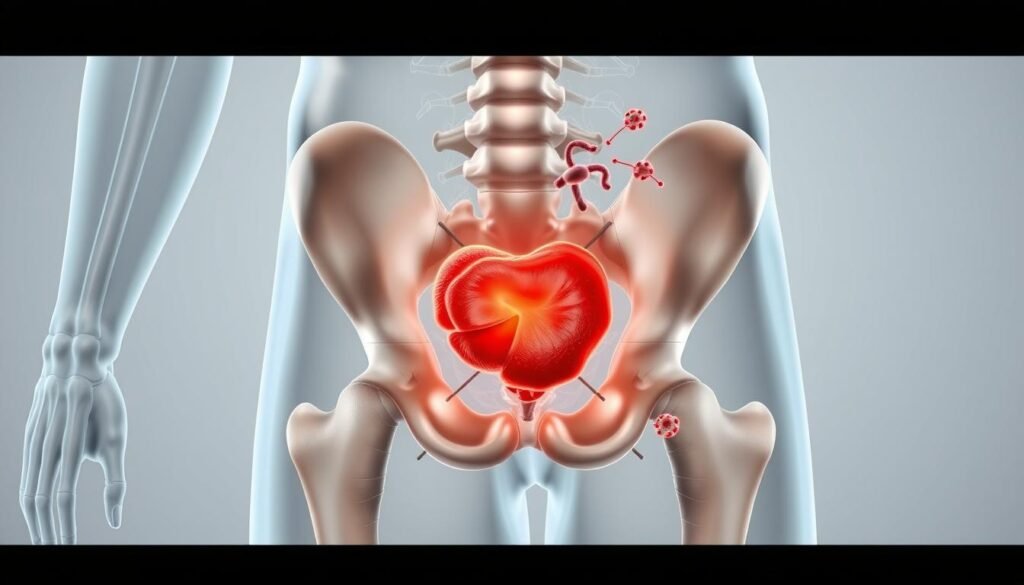
Prostate cancer starts in the prostate, a tiny gland important in male reproduction. It’s the top cancer among men in the U.S., with 299,000 new cases diagnosed yearly. Often, signs of prostate cancer don’t show up until it’s advanced. So, knowing about it early and getting screened is key to beat it.
About one in eight men will get diagnosed with prostate cancer. The good news? The five-year survival rate is 97.5%. And if found early, this rate jumps to 100%. Being aware of symptoms, genetics, and lifestyle helps in managing this cancer early.
A healthy lifestyle lowers prostate cancer risk. Eating well, staying active, and getting enough sleep are crucial. Knowing how to prevent it is also important. Healthy habits reduce risks and make treatments work better. For tips on keeping your prostate healthy, info is available here.
What Causes Prostate Cancer
Prostate cancer starts with complex changes in cells. It involves genetic alterations and hormonal effects. Knowing these causes helps in fighting and managing the disease. Research has made many discoveries about this illness.
Overview of Prostate Cancer Development
Prostate cancer begins when DNA changes lead to rapid cell growth. Inherited genes cause about 10% of these cancers. Genes like BRCA1, BRCA2, and HOXB13 increase the risk of getting it early. Also, Lynch syndrome makes it more likely to get prostate and other cancers. These gene changes can lead to serious conditions over time.
Mutations and DNA Changes
Men get mutations in their genes throughout their lives. Some are inherited, others come from environmental or lifestyle factors. For example, prostate inflammation can harm DNA, possibly leading to cancer. High levels of insulin-like growth factor-1 (IGF-1) also raise the risk. Research shows that more IGF-1 means a higher chance of prostate cancer.
It’s important to understand these mutations to manage and prevent cancer better. Ongoing research might reveal more about what causes this disease.
| Mutation Type | Associated Risk | Example Genes |
|---|---|---|
| Inherited | Major factor in up to 10% of cases | BRCA1, BRCA2, HOXB13 |
| Acquired | Develop during a man’s lifetime | Various, not passed to offspring |
| Inflammation-related | Possible link to DNA damage | N/A |
| Hormonal Influence | Higher IGF-1 levels may increase risk | N/A |
| Lynch Syndrome | Increased risk of multiple cancers | N/A |
Age as a Primary Risk Factor
Being older is the biggest risk factor for prostate cancer. Around 60% of prostate cancer cases are in men who are 65 or older. Knowing this helps us see why it’s so important to check for prostate cancer early.
Prostate Cancer Statistics by Age
As men get older, the chance of getting prostate cancer goes up. Below is a table with some important numbers:
| Age Group | Diagnosis Rate (%) |
|---|---|
| Under 50 | 0.2 |
| 50-64 | 19 |
| 65-74 | 34 |
| 75 and older | 26 |
This information shows that older men are more likely to get prostate cancer. It supports the need for early and regular screening.
Age Trends in Prostate Cancer Diagnosis
Looking at age trends gives us important knowledge. Prostate cancer is very rare in men under 50. After that, the risk increases greatly with each decade. Older men, especially over 65, make up two-thirds of all cases.
This shows how vital early check-ups are for older men. It’s really important for them to talk to their doctors about getting screened.
Racial and Ethnic Differences in Risk
Racial and ethnic backgrounds deeply affect prostate cancer prevalence and its outcomes. African American men are especially at risk. They get prostate cancer at younger ages and have higher death rates. It’s crucial to grasp these differences to create better prevention and treatment plans.
Impact of Race on Prostate Cancer Prevalence
The Multiethnic Cohort Study shows African American men are twice as likely to get prostate cancer as White men. Latino men also face a 16% higher risk than White men. This shows how important it is to look at race when thinking about prostate cancer treatment.
Lifestyle choices and genes play a part in these differences. Unhealthy habits and a history of diabetes are linked to cancer risk in all ethnicities. For men of African ancestry, genetic differences are key. They have more risk alleles than men of European descent, 45% versus 42%.
Why African American Men Are at Higher Risk
African American men are more likely to get and die from an aggressive type of prostate cancer. The African Caribbean population has the world’s highest mortality rate, with 26.3 deaths per 100,000. Asian men have the lowest rate at 2.5 per 100,000.
Socioeconomic factors make things worse for African American men. Issues like not enough money, no insurance, and not knowing much about health make them less likely to get treatment. This means they often get help too late, which makes the cancer more deadly.
To fully understand these issues and how lifestyle affects racial disparities in prostate cancer, we must focus on prevention. It’s vital to tackle these complex factors head-on.
Family History and Genetic Factors
It’s vital to know how family history relates to prostate cancer. Genetics play a big role in the risk of prostate cancer. If prostate cancer was in your family, your chances of getting it go up. This is especially true for close family members. Changes in genes can also increase the risk. This highlights how important it is to know and take steps early.
Understanding Hereditary Prostate Cancer
About 10% of men with prostate cancer have it because of changes in their genes. Gene changes like BRCA1, BRCA2, and HOXB13 are linked to a higher risk. If you’re related to someone with prostate cancer, it’s a good idea to get genetic counseling. This can help you understand your risk and what screenings might be right for you.
The Role of Inherited Gene Changes
Inherited factors can be behind up to 60% of prostate cancer cases. If prostate cancer runs in your family, especially if they were young when diagnosed, your risk is higher. For example, your risk goes up a lot if your brother or father had it. Genetic testing helps understand these risks better. It can also guide treatment for those at high risk.
| Relationship | Relative Risk (RR) |
|---|---|
| Having one affected first-degree relative | 2.48 |
| Brother diagnosed with prostate cancer | 3.14 |
| Father diagnosed with prostate cancer | 2.35 |
The Influence of Diet on Prostate Cancer Risk
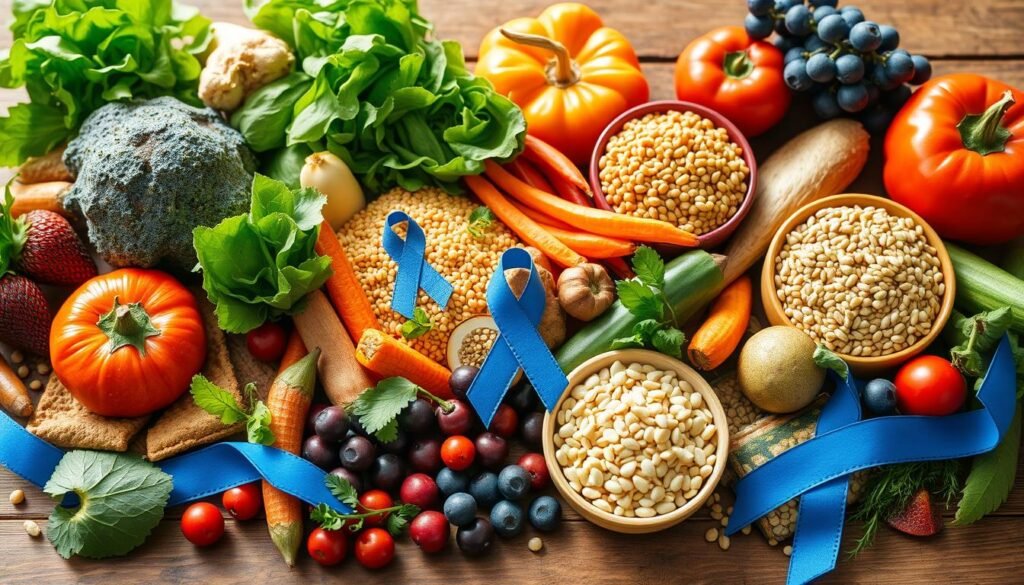
Diet is very important in preventing prostate cancer. Studies show that eating healthily can lower prostate cancer risk. Eating lots of vegetables is key; men who eat 28 or more vegetable servings a week have a lower risk.
Eating cruciferous vegetables like broccoli can really help. Men who eat them three times a week cut their prostate cancer risk by 41 percent. Also, foods rich in fiber help remove bad compounds from the body. This keeps you healthy and may lower cancer risk.
It seems eating cereals and nuts may help avoid prostate cancer death. It’s suggested to get 20 percent of calories from fats, keeping saturated fat under 10 percent. This is important for lowering prostate cancer risk.
Omega-3 fatty acids in fish are also good. Men with high omega-3 levels have a 40 percent lower prostate cancer risk. Eating fish at least three times weekly further reduces the risk. Those who avoid fish have a much higher risk of developing prostate cancer.
How many calories you eat also matters. One study showed eating lots of calories raises local prostate cancer risk by 115 percent. Men eating the most calories were nearly four times more likely to get prostate cancer.
Changing what you eat can help prevent prostate cancer. For more information on diet and prostate cancer, check out this study.
Obesity and Its Relationship with Prostate Cancer
Obesity and prostate cancer have a complex link that affects the disease and its treatment. Even though obesity may not increase the overall chance of getting prostate cancer, it’s tied to more severe forms. Knowing this helps doctors and patients make better treatment choices.
Link Between Obesity and Aggressive Prostate Cancer
Being obese raises the risk of severe and deadly prostate cancer. Research has found that a higher body mass index (BMI) increases the chance of dying from prostate cancer. Specifically, a BMI over 30 kg/m2 ups prostate cancer risk by 9%. For those with a BMI over 35 kg/m2, the risk is even higher.
Scientists are studying how things like high cholesterol and inflammation might link obesity to prostate cancer. Staying at a healthy weight helps avoid prostate cancer problems. Eating fewer fats and more fruits and veggies can help lower prostate cancer risks. Regular workouts also play a big role. They fight inflammation and boost the immune system, cutting down cancer risks. Healthy habits include:
- Avoiding simple sugars.
- Reducing fat intake.
- Increasing fruit and vegetable consumption.
- Exercising for 30 minutes on most days.
More than 30% of U.S. adults are obese. This public health issue makes it crucial to understand how obesity and prostate cancer are connected.
Current research is looking into how different body sizes affect prostate cancer risks. Men with waists over 94 cm have a slightly higher chance of getting aggressive prostate cancer.
For men with prostate cancer, managing their weight is key. Obesity might protect against slow-moving cancers but not against serious ones. Therefore, seeing obesity as a risk factor shows the need to focus on diet, exercise, and health in prostate cancer care.
Smoking and Prostate Cancer Risk
Studies show mixed findings on smoking and prostate cancer. Yet, we know smoking increases death risk from this cancer. Men who smoke are 42% more likely to die from prostate cancer than nonsmokers.

Prostate cancer is a major cause of cancer deaths, calling for urgent action. It’s the second most common cancer in men. Cases are expected to grow, hitting 2.3 million by 2040. In 2021, the USA saw 248,530 new cases. This makes it vital to understand risk factors like smoking.
- Current smokers have a lower chance of getting prostate cancer, but their survival rates worsen if they do.
- Smokers at the start of the study faced nearly twice the death risk from prostate cancer as nonsmokers.
- Quitting smoking can bring a smoker’s death risk down to that of people who’ve never smoked.
- Efforts to cut smoking rates through laws and taxes have reduced smoking and its deadly impacts.
While smoking might not greatly raise the chance of getting prostate cancer, it clearly boosts death risk for those diagnosed. Smoking’s effects on prostate cancer symptoms are serious, especially for those at high risk. Quitting smoking is essential for public health.
| Smoking Status | Prostate Cancer Incidence | Risk of Death from Prostate Cancer |
|---|---|---|
| Current Smokers | Relative Risk: 0.74 | 1.42 times higher than non-smokers |
| Former Smokers | Relative Risk: 0.70 | Risk aligns with never smokers after quitting |
| Never Smokers | Baseline risk | Standard mortality risk |
Chemical Exposures and Prostate Cancer
Looking into chemical exposure is key when studying risks for prostate cancer. Many studies try to find specific chemicals that increase prostate cancer risks. Substances like arsenic and chemicals firefighters face are linked with higher risks. Knowing these links is crucial for developing protection and improving health outcomes.
Specific Chemicals Linked to Increased Risk
Research shows that certain chemicals raise the risk of getting prostate cancer. Arsenic is a major concern due to its presence in some jobs and places. Firefighters might face a higher risk because they are exposed to many toxic substances in smoke and firefighting agents.
Some studies also link chemicals like polychlorinated biphenyls (PCBs) and chromium to higher cancer risks. Golden R and Kimbrough R reviewed evidence on PCBs and human cancer risks since 2003. Epidemiological studies suggest a connection between chromium exposure and increased cancer deaths, especially in industrial jobs.
Shift work is another factor that might affect prostate cancer risk. A study with 116,000 people showed a higher cancer risk among those doing shift work. We need more targeted research to understand these risks better.
To learn more about how chemicals affect prostate cancer risk, you can check the literature review here.
Inflammation, Infections, and Prostate Cancer
Understanding how inflammation and infections relate to prostate cancer is key. Inflammation in the prostate, known as prostatitis, may affect cancer risks. Sexually transmitted infections can cause inflammation too, which might increase cancer risk.
Prostatitis and Its Potential Risks
Chronic inflammation, often from prostatitis, might help cancer grow. Many men experience silent inflammation that lasts a long time. This inflammation can harm DNA, increasing cancer risk.
Sexually Transmitted Infections Impact
Some research links infections like Chlamydia to higher prostate cancer risk. Men with these infections often have more prostate-specific antigens. This could mean their prostate is inflamed. Large studies show a slight cancer risk increase in men with infections. More research is needed, but these infections could affect prostate cancer risk.
The Role of Vasectomy in Prostate Cancer Risk
Vasectomy is a common choice for contraception in the United States, involving 15% of men. Yearly, between 175,000 and 354,000 men get this procedure. It makes us wonder about its link to prostate cancer risk.
Some research shows a small rise in prostate cancer risk for men who’ve had a vasectomy. A review of 56 studies found a slightly increased risk, with a relative risk of 1.18. When only looking at more reliable studies, this risk drops to 1.09. After adjusting for screening factors, it further lowers to 1.06.
Studies seen as less reliable show a higher risk, at 1.31. In terms of deadly prostate cancer, the risk is 1.19 across the board. Yet, in intensively screened cases, this risk shoots up to 1.56.
Nevertheless, according to the American Urologic Association’s 2015 guidelines, vasectomy isn’t considered a prostate cancer risk factor. There’s also no strong link found between vasectomy and heart diseases.
In conclusion, while there’s some link between vasectomy and prostate cancer risk, the evidence isn’t clear-cut. More research is needed to confirm these findings. This could help guide men’s decisions regarding reproduction.
| Study Type | Relative Risk | Comments |
|---|---|---|
| All 56 Studies | 1.18 | Overall prostate cancer risk |
| Low-Bias Studies | 1.09 | Risk attenuated but significant |
| With Screening Adjustments | 1.06 | Minimal increase in risk |
| High-Bias Studies | 1.31 | Increased risk observed |
| Lethal Prostate Cancer | 1.19 | Full cohort analysis |
| Highly Screened Cohort | 1.56 | Significant increase in risk |
Conclusion
Prostate cancer is the most common cancer in American men, after skin cancer. Knowing about risk factors like age, family history, and lifestyle is crucial. As men get older, especially past 50, their risk goes up. African American men have a higher risk, which means more awareness is needed.
Having a dad or brother with prostate cancer raises a man’s risk. Genetic factors also play a big part, according to research. While no method guarantees prevention, eating fewer fats and more fruits and veggies helps. Regular check-ups can catch it early and may reduce the risk.
Making smart health choices is key in preventing prostate cancer. Being aware of your risks and acting early is essential. As research advances, we learn more, bettering prevention and treatment. This shows the power of knowledge in fighting prostate cancer.