Did you know one in seven men will face prostate cancer? This fact highlights the importance of knowing the symptoms. Recognizing signs early can change the outcome greatly. Men should be vigilant to catch potential problems early.
Starting the fight against prostate cancer means being aware first. Knowing Prostate Cancer Signs might seem hard, but help is here. This guide gives clear steps for those spotting worrying symptoms. It’s about knowing when to screen and when to see a doctor.
Looking for more on diagnosis and treatment? Mayo Clinic’s urology experts offer deep insights. They can help plan your prostate health management. Find more information here.
Key Takeaways
- One in seven men are diagnosed with prostate cancer, making early detection crucial.
- Recognizing prostate cancer symptoms is vital for timely intervention.
- Regular screenings can significantly aid in the Early Detection of Prostate Cancer.
- Taking proactive steps upon noticing symptoms can improve treatment options.
- Consulting a healthcare provider is essential if symptoms arise or worsen.
Understanding Prostate Cancer
Prostate cancer starts in the prostate gland and mainly affects older men. It happens when cells grow abnormally. It’s a big concern in Men’s Health worldwide.
What is Prostate Cancer?
Cells in the prostate, a gland making seminal fluid, can turn into cancer. Sometimes it grows slow, but it can also spread fast. Knowing about this cancer is key for early detection and better chances of beating it.
Statistics and Prevalence
It’s the second most common cancer in men globally. Prostate Cancer Statistics show 14% of US men may get it. It highlights why we need to spread the word.
Black men are at higher risk and more likely to die from it. Screening can help catch it early, especially for high-risk groups. It’s vital for Men’s Health to keep talking about prostate cancer and how to fight it.
Recognizing Prostate Cancer Signs
Knowing the Prostate Cancer Signs is key for quick action. Many men dismiss the symptoms. This can delay finding and treating the condition. Here are the symptoms to look out for, showing why early detection is vital.
Common Symptoms
Early-stage prostate cancer might not show strong symptoms. This makes it important to be aware. Look out for these signs:
- Frequent urination, especially at night
- Difficulty starting or stopping urination
- Blood in urine or semen
- Painful urination or ejaculation
- Bone pain, particularly in the back or hips
- Unexplained weight loss
- Fatigue without a clear cause
These Urinary Symptoms in Men could be seen as minor issues. That’s why you shouldn’t overlook any ongoing symptoms.
Importance of Early Detection
Finding prostate cancer early is key to better treatment success. Around 85% of cases are found during routine checks, so being informed is crucial. Many men without clear symptoms get diagnosed through tests like the PSA blood test and digital rectal exams.
Regular check-ups help catch Early Detection of Prostate Cancer early. This opens the door to early and often less harsh treatments. Men who have a family history or other risk factors should start screenings early, as advised. Knowing these signs can help you seek timely medical help, leading to better health results.
Notice Prostate Cancer Symptoms
It’s important to know the signs of prostate cancer for early action and treatment. Many symptoms can signal prostate health issues. If men spot any concerning signs, they should get help quickly.
Key Symptoms to Watch For
There are several common symptoms to look out for. Here’s what men should watch for:
- Frequent urination, especially at night
- Painful ejaculation
- Blood in urine or semen
- Erectile dysfunction
- Difficulty starting or stopping urination
- Weak urine flow
- Persistent pain around the prostate while sitting
Other issues like Benign Prostatic Hyperplasia (BPH) and infections can show the same signs. Spotting prostate cancer symptoms early can greatly help with treatment.
When to Seek Medical Attention
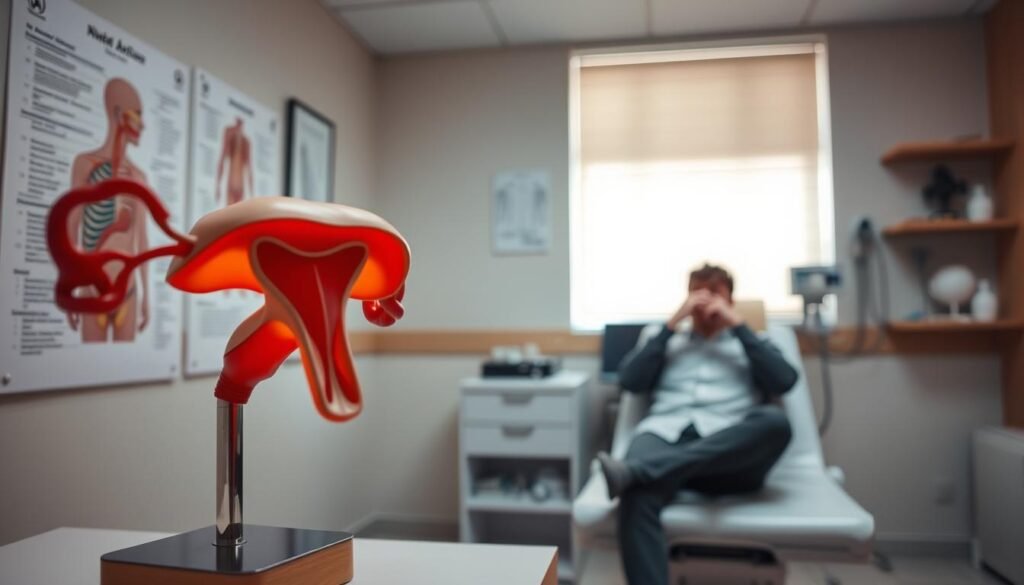
Seeing a doctor is key if symptoms show up. Catching problems early is crucial for good health outcomes. Those with risk factors like age and family history need to be extra careful. If there’s unexplained pain in the pelvis or lower back, see a doctor right away. Taking charge of your health leads to better treatment chances.
Prostate Health Screening Recommendations
Prostate health screenings are key for early detection and handling of prostate cancer. Knowing the Age and Risk Factors guides men on when to start discussions about screenings with their doctors.
Age and Risk Factors
The American Cancer Society suggests men at average risk start talking about screening at 50. This is if they expect to live 10 more years. For African American men or those with family history of prostate cancer before 65, start at 45. And, if multiple close relatives were diagnosed young, consider starting at 40.
It’s very important to keep an eye on PSA levels. If your PSA is under 2.5 ng/mL, you might only need tests every two years. But if it’s 2.5 ng/mL or more, getting checked every year is smarter. Men not expected to live more than 10 years, and without symptoms, usually don’t get screened.
Talk to Your Doctor About Screening
Starting the talk about prostate screening is a step towards smart choices. Men between 55 to 69 should think about the pros and cons of PSA tests with their doctor. Those younger than 55 should only consider it if they are at higher risk. Meanwhile, men older than 70 typically shouldn’t get routine screenings.
Keeping up with new information on testing is important. The PSA test can spot prostate cancer, but high PSA might also mean other issues. So, it’s vital to talk about what a high PSA could mean and the value of catching cancer early.
Prostate Exam: What to Expect?
Learning about a prostate exam can make it less scary. It helps patients and doctors talk openly. The main parts are the Digital Rectal Exam (DRE) and the Prostate-Specific Antigen (PSA) test. This knowledge helps men go for regular checks. This leads to better health.
Digital Rectal Exam (DRE)
In a DRE, a doctor uses a gloved finger to check the prostate through the rectum. They can feel if there’s anything unusual. Most men say the DRE is fast and doesn’t hurt much. You get the results right away, so any next steps can be taken quickly.
Prostate-Specific Antigen (PSA) Test
The PSA test checks your blood for a specific protein. Your prostate makes this protein. High PSA levels might need more looking into. It’s a good idea not to ejaculate for 48 hours before the test. It might change the PSA levels. PSA test results take about a day. They help decide what to do next. For deeper understanding, take a look at this thorough guide.
Diagnosing Prostate Cancer
To diagnose prostate cancer, doctors follow several steps. They use different tests to see if a patient has cancer. Knowing how aggressive the cancer is, is key. The Gleason score helps with this.
Diagnostic Procedures
Doctors use a few methods to check for prostate cancer:
- Digital Rectal Exam (DRE): A doctor checks the prostate through the rectum to find any odd changes.
- Prostate-Specific Antigen (PSA) Test: This blood test looks at PSA levels. High levels might indicate prostate problems.
- Transrectal Ultrasound (TRUS): This ultrasound helps doctors see the prostate gland.
- Biopsy: Doctors collect tissue samples to check if there are cancer cells.
Doctors might also use MRI or CT scans. These scans help them see the prostate and nearby tissues clearer.
Understanding Gleason Scores
Gleason scores tell how serious prostate cancer is. The scores range from 2, less aggressive, to 10, very aggressive. They show how different the cancer cells are from normal cells. This helps doctors know how fast the cancer can grow and spread.
| Gleason Score | Grade | Indication |
|---|---|---|
| 2-4 | Low Grade | Nonaggressive cancer with less chance of spreading. |
| 5-6 | Intermediate Grade | Moderate likelihood of growth; requires monitoring. |
| 7 | High Grade | More aggressive and requires careful evaluation. |
| 8-10 | Very High Grade | Highly aggressive cancer that may spread quickly. |

Available Treatment Options
When you learn you have prostate cancer, knowing your treatment choices helps manage the disease. Not all cases need quick action. For low-risk patients, active surveillance is an option. This means watching the cancer without treating it right away. Doctors keep a close eye on any changes.
Active Surveillance vs. Immediate Treatment
Doctors often suggest active surveillance for low-risk prostate cancer. This plan delays treatment but watches the patient’s health closely with checks and scans. On the other hand, immediate treatment suits those at higher risk. Their cancer might be growing fast or causing symptoms. There are many treatments available.
Types of Treatments
There are several ways to treat prostate cancer, such as:
- Surgery (Radical Prostatectomy)
- Radiation Therapy
- Hormone Therapy
- Chemotherapy
- Cryotherapy
Treatment options have both benefits and possible side effects. For example, some can cause issues like erectile dysfunction or trouble controlling urine flow. Newer treatments try to reduce these problems.
Talking with your healthcare team about treatments is important. This lets you weigh the good points and risks. It helps you pick the best plan for you. To learn more about prostate cancer treatments, check out sources like this guide.
Living with Prostate Cancer
Living with prostate cancer is tough, not just physically but emotionally too. Patients often feel anxious, scared, or sad. They face the challenge of accepting their condition and looking for treatment. Finding emotional support from professionals and support groups is key.
Emotional and Psychological Support
Knowing how prostate cancer affects your emotions can help you cope better. Here are some helpful ways:
- Therapeutic counseling helps individuals express and process their feelings.
- Engaging in mindfulness and relaxation techniques can alleviate stress.
- Physical activities like yoga or walking promote mental well-being.
Using these approaches improves life quality while dealing with prostate cancer. Getting support from loved ones can strengthen relationships. It gives a more positive outlook.
Importance of Support Groups
Prostate Cancer Support Groups are very helpful for patients. They offer several benefits:
| Benefits | Description |
|---|---|
| Emotional Relief | Sharing experiences with others helps to normalize feelings of fear and anxiety. |
| Informational Resources | Members can offer insights on treatment options and coping strategies. |
| Social Connections | Building friendships within the group promotes social engagement and reduces isolation. |
| Empowerment | Support groups foster a sense of control over one’s health journey. |
Joining these groups can be a game-changer for someone with prostate cancer. They don’t just share info, they create a community that understands what you’re going through.
Conclusion
Prostate cancer awareness is key, especially since 1 in 8 men will face a diagnosis in their lifetime. This coming year, around 300,000 new cases are expected. It’s vital for everyone, especially those over 65 and with certain risk factors, to know the symptoms and the value of early detection.
Education and regular screenings can greatly improve treatment outcomes. In early stages, many do not see symptoms, making tests like PSA and digital rectal exams important. Knowing most prostate cancers grow slowly can reassure while encouraging people to be careful.
The path to better prostate health includes talking openly with doctors and having a strong support network. It also means learning continuously about prostate cancer. For men and their caregivers, using these tools can enhance health and life quality.